Translation

.يولد جميع الناس أحرارا متساوين في الكرامة والحقوق. وقد وهبوا عقلا وضميرا وعليهم أن يعامل بعضهم بعضا بروح الإخاء‎
FoxLingo German Spanish French Arabic Czech Greek Hungarian Italian Polish Portuguese Romanian Russian Serbian Slovenian Thai Turkish
Showing posts with label Religion. Show all posts

Sunday, June 20, 2010

Martyrs of the Green Movement

by MUHAMMAD SAHIMI in Los Angeles

19 Jun 2010 19:3517 Comments
Names of 110 killed in political violence over the past year.

The Iranian year of 1388 ended on March 20, 2010. It was one of the most turbulent years in the country's modern history. Its beginning and end were both marked by much promise, but for completely different reasons. The year had begun with the hope that the presidential election of June 12, 2009, would result in the election of a candidate with a vision for a better Iran -- a more open, more tolerant society, with less corruption, no political crimes, freedom of the press, and freedom of thought. This hope was dashed when the hardliners rigged the election and declared Mahmoud Ahmadinejad the "victor."

But precisely due to this antidemocratic fraud, the Green Movement that had arisen before the election gathered strength. It spread its wings and presented to the world a completely different image of Iran: a country with a young, educated, dynamic population that is willing to stand up to the forces of oppression and repression, express itself eloquently, and sacrifice for a better future. Thus, as Iran begins its new year, there is renewed hope.

Mousavi-supporter-Azadi-square-Tehran.jpgThe past year also recorded the largest number of Iranian people who lost their lives due to political violence since the bloody summer of 1988 (1367 in the Iranian calendar), when about 4,500 political prisoners were executed. The riots that erupted in mid-1992 and, particularly, the Eslamshahr riots of April 1995 did result in many deaths (though still not as many as in 2009), but they had mostly to do mostly with people's anger over rampant inflation and lack of basic services and were not fundamentally political.

How many people were murdered in 1388 due to political violence? No one really knows, and in a nation where there is virtually no independent press to serve as a watchdog, it is very difficult to get an accurate estimate of the total number of casualties. We can, however, distinguish between two groups among those confirmed as dead. In one group are those whose families have declared the martyrdom of their loved ones to the two committees that Mir Hossein Mousavi and Mehdi Karroubi have set up for compiling the list of the killed. In the second group are those whose families have been under tremendous pressure not to report the death of their loved ones to the two committees, and not to speak to the press.

The credible Iranian sources reporting on the number of people killed include Norooz News, the website of the Islamic Iran Participation Front, Iran's largest political party and leading reformist group; Kalame, Mousavi's official website; and Kalameh Sabz, Jonbeshe-Rah-e Sabz, and Aras News, three reformist news sites supportive of the Green Movement. In a few cases, news wires aligned with the hardliners, such as the Fars News Agency, which is controlled by the Islamic Revolutionary Guard Corps, have also confirmed the deaths of demonstrators or those who were arrested.

Several organizations have also published lists of people whose deaths have been confirmed by multiple credible sources. One is the League for the Defense of Human Rights in Iran. Its list of confirmed murders, containing more than 100 names, was first published in August 2009 and updated on March 10, 2010. A list of 72 names was published by Aseman Daily News in September 2009. Norooz News just published the precise addresses of the graves of 50 people in Tehran's Behesht-e Zahra cemetery.

What follows is the list of 107 confirmed dead collated from all of the credible sources. Their age, if known, is in parentheses. First, a few statistics: 13 of the killed (12 percent) were women; at least 23 of them were university students (22 percent); two were tortured to death; two were journalists. In several cases, there is no information about how the victims were killed -- all we know is the location of their graves.
1. Neda Agha Soltan (27), university student, murdered on June 20, 2009, in Tehran.
2. Kianoush Asa, university student, killed on June 15, 2009, in Tehran.
3. Behzad Aghazadeh Ghahramani, murdered on July 17, 2009, after the Friday prayers in Tehran led by former president Ali Akbar Hashemi Rafsanjani.
4. Morad Aghasi, murdered on July 17, 2009, in the Kahrizak detention center on the southern edge of Tehran.
5. Mina Ehterami, university student, killed on June 15, 2009, in the attack on the Tehran University dormitory.
6. Hossein Akhtar Zand (32), murdered on June 15, 2009, in Shiraz.
7. Arman Estakhripour (18), beaten to death on July 13, 2009, in Shiraz.
8. Neda Asadi; nothing is known about the circumstances of her death.
9. Amir Eslamian, university student, working for Mousavi's campaign; his body was discovered on November 27, 2009, in Boukan.
10. Saeed Esmaeili Khanbebin (23), hit in the head and killed.
11. Sohrab Erabi (19), pre-university student, murdered in Evin Prison on June 20, 2009.
12. Alireza Eftekhari (29), journalist, killed by hits to the head on June 15, 2009; his body was given to his family the following month.
13. Naser Amirnejad (26), university student in aerospace engineering, killed in Yasouj.
14. Mohsen Entezami, murdered in the Kahrizak detention center on July 14, 2009.
15. Vahed Akbari (34), killed on June 20, 2009, after his arrest in Tehran's Vanak Square.
16. Hossein Akbari, killed by hits to the head on July 26, 2009.
17. Mohsen Imani, university student, killed in the attack on the Tehran University dormitory on June 15, 2009.
18. Fatemeh Barati, university student, killed in the attack on the Tehran University dormitory on June 15, 2009.
19. Mohammad Hossein Barzegar (25), killed by a bullet to his head, after being arrested in Tehran's Haft-e Teer Square on June 17, 2009.
20. Yaghoub Boroayeh, university student, killed by a bullet on June 25, 2009.
21. Jafar Boroayeh, assistant professor at the University of Ahwaz, killed by a bullet to his head on June 28, 2009.
22. Sorour Borouman (58), killed on June 15, 2009, in Tehran.
23. Hamed Besharati (26), blogger and poet; nothing is known about the circumstances of his death.
24. Jahanbakhsh Pazouki (31), killed by a knife on December 28, 2009 (Day of Ashura).
25. Mohammad Javad Parandakh, university student; nothing is known about how he was killed.
26. Dr. Ramin Pourandarjani, physician on duty in the Kahrizak detention center, presumably poisoned on November 10, 2009.
27. Amir Arshaf Tajmir, killed on December 28, 2009 (Day of Ashura) in Tehran.
28. Farzad Jashni, killed on June 20, 2009.
29. Somayyeh Jafargholi, university student, killed by a bullet on September 27, 2009.
30. Bahman Jenabi; nothing is known about the circumstances of his death.
31. Amir Javadifar, university student, arrested on July 9, 2009; died in prison.
32. Moharram Chegini Gheshlaghi (35); nothing is known about how he was murdered.
33. Mohsen Haddadi (24), computer programmer, killed by a bullet to his forehead on June 23, 2009.
34. Ali Hassanpour, killed on June 15, 2009, in Tehran's Azadi Square; his body was given to his family 105 days later.
35. Amir Mehdi Hamzehlouei, killed in Gheyterieh Park in Tehran on October 2, 2009.
36. Hesam Hanifeh (19), killed by a bullet to his chin on June 16, 2009.
37. Mehrdad Heidari, journalist, killed on July 13, 2009, in Mashhad.
38. Masoud Khosravi, killed in Tehran's Azadi Square on June 15, 2009.
39. Sh. Khezri, university student, killed in Tehran's Baharestan Square on June 15, 2009.
40. Abbas Disnad (40), killed by hits to his head on June 20, 2009; his body was given to his family after $15,000 was paid.
41. Mohammad Raeis-Najafi, beaten to death near Tehran's Azadi Square on June 15, 2009.
42. Mohammad Ali Rasekhi-Nia (40), killed by a bullet on December 28, 2009 (Day of Ashura).
43. Fatemeh Rajabpour (38), killed with her mother, Ms. Borouman (number 22 above).
44. Shahrokh Rahmani (26), run over by a car on December 28, 2009 (Day of Ashura) in Tehran.
45. Dr. Rahimi; nothing is known about the circumstances of his death.
46. Hamid Rezaei, killed on January 1, 2010, in Homayounshahr.
47. Ramin Ramazani (22); nothing is known about how he was murdered.
48. Mohsen Ruhol-amini (25), university student, killed in the Kahrizak detention center.
49. Babak Sepehr (35); nothing is known about how he was killed.
50. Fahimeh Selahshour (25), killed by hits to her head in Tehran's Vali-Asr Square on June 14, 2009.
51. Fatemeh Semsarpour, killed by a bullet on June 20, 2009, near Tehran's Azadi Square.
52. Ashkan Sohrabi (18), high school student, killed by a bullet in Tehran on June 20, 2009.
53. Tina Soudi, university student, killed by a bullet on June 20, 2009, in Tehran's Enghelab Square.
54. Hassan Shapouri, killed on July 14, 2009.
55. Ali Shahnazar (41), killed on September 29, 2009.
56. Ali Shahedi (24), killed on June 21, 2009, while detained by police.
57. Kasra Sharafi, university student, killed in the attack on the Tehran University dormitory on June 15, 2009.
58. Kambiz Shoaei, university student, killed in the attack on the Tehran University dormitory on June 15, 2009.
59. Shafi' Nejad, killed on June 15, 2009.
60. Zahed Shekarabi (20), tortured to death in Esfahan on July 21, 2009.
61. Yousef Saleh; nothing is known about how he was murdered.
62. Davoud Sadri (27), killed by a bullet on June 15, 2009, in Tehran; his body was given to his family after $6,000 was paid, plus a $350 charge for the bullet.
63. Seyyed Reza Tabatabaei (30), killed by a bullet to his head on June 20, 2009, in Tehran.
64. Vahid Reza Tabatabaei (29), killed by a bullet to his head on June 26, 2009, in Tehran.
65. Hossein Toufanpour, killed by a bullet to his head on June 20, 2009, in Tehran.
66. Hossein Tahmasebi (25), killed when his head was repeatedly hit by an object on June 15, 2009, in Kermanshah.
67. Salar Tahmasebi (27), university student, killed by a bullet to his head on June 20, 2009, in Tehran.
68. Maysam Ebadi, killed by a bullet to his abdomen on June 13, 2009, in Tehran's Sadeghieh Square.
69. Saeed Abbasi (28), killed on June 20, 2009; his body was given to his family after $8,000 was paid.
70. Abolfazl Abdollahi (21), killed by a bullet to his head on June 20, 2009, in Tehran.
71. Hamid Araghi, killed by a bullet on June 27, 2009; his family, initially told to pay $12,000 for his body, eventually paid $5,000.
72. Kaveh Alipour (19), killed on June 20, 2009; his family paid $3,000 to get his body.
73. Mostafa Ghanyan, university student, killed in the attack on the Tehran University dormitory on June 15, 2009.
74. Reza Fattahi, university student, killed in the Kahrizak detention center on July 14, 2009.
75. Ali Fathalian, killed in Tehran; nothing else is known.
76. Shahram Faraji (30), killed on December 28, 2009 (Day of Ashura) in Tehran.
77. Mehdi Farhadirad (34), killed by a bullet to his face on December 28, 2009 (Day of Ashura) in Tehran.
78. Mohammad Hossein Fayzi (28); nothing is known about how he was killed.
79. Sajjad Ghaed Rahmati; nothing is known about how he was murdered.
80. Salar Ghorbani Param (22); nothing is known about how he was murdered.
81. Rahim Mahmoudpour, killed by a bullet on August 3, 2009, in Tehran.
82. Hamid Maddah Shourcheh, university student, killed after his head was repeatedly hit by an object.
83. Moazzez (27), killed by a bullet to his eye on June 20, 2009, near Tehran's Azadi Square.
84. Pouya Azadbeigi, arrested on June 20, 2009, and died soon after his release.
85. Dr. Moghsoudlou; nothing is known about the circumstances of his murder.
86. Behzad Mohajer (47), killed by a bullet to his heart on June 15, 2009.
87. Maryam Mehraaein (24); nothing is known about how she was murdered.
88. Taraneh Mousavi, murdered on June 28, 2009.
89. Seyyed Ali Mousavi Habibi (42), nephew of Mir Hossein Mousavi, assassinated on December 28, 2009 (Day of Ashura) in Tehran.
90. Mostafa Mirebrahimi (22), killed under torture in August 2009.
91. Mohammad Naderipour, university student and Mousavi campaign worker.
92. Nader Naseri, killed on June 20, 2009, in Tehran.
93. Ahmad Nejati, killed by hits to his head.
94. Ahmad Naeimabadi, killed by a bullet in Tehran's Azadi Square.
95. Iman Namazi, university student, killed in the attack on the Tehran University dormitory on June 15, 2009.
96. Mohammad Ali Nikzadi (22), architect, killed by a bullet to his abdomen on June 16, 2009, in Tehran.
97. Masoud Hashemzadeh, killed by a bullet on June 20, 2009, in Tehran.
98. Iman Hashemi (27), killed by a bullet to his eye on June 20, 2009, in Azadi Street in Tehran.
99. Mostafa Kashani Rasa, Mousavi campaign worker, killed by a bullet at the campaign headquarters in Gheytarieh, Tehran, on June 14, 2009.
100. Mohammad Kamrani (18), died in Tehran's Mehr Hospital.
101. Mehdi Karami (25), killed by a bullet to his neck on June 15, 2009, in Tehran.
102. Mostafa Karim Beigi (27), murdered by a bullet to his head on October 27, 2009.
103. Parisa Kolli (25), university graduate, killed by a bullet to her neck on June 21, 2009, in Tehran.
104. Majid Kamali (23), killed on August 25, 2009.
105. Amir Kaviri; nothing is known about how he was murdered.
106. Mostafa Kiarostami (22), killed by hits to his head on July 17, 2009.
107. Milad Yazdanpanah (30), killed by a bullet in Azadi Street in Tehran.
Three other people lost their lives for the Green Movement. One is Mohammad Asghari, who was a computer expert and worked for the office of computer security at the Ministry of Interior. He leaked a considerable amount of information about the actual vote count after the rigged June 2009 election and mysteriously lost his life in a car accident soon thereafter. It is widely believed that he was murdered.

The other two are Mohammad Reza Ali Zamani (37) and Arash Rahmanipour (19). They had been arrested before the election, but were hanged in early January 2010 in what is widely believed to be a message to the supporters of the Green Movement that they too could be hanged. Neither one had committed any serious offense.
In addition, Dr. Masoud Ali-Mohammadi, professor of physics at the University of Tehran, was assassinated. There is considerable evidence that he was murdered by the hardliners, although this is not a certainty.

These are freedom fighters who lost their precious lives for their ideals. Their place in history is assured. The Iranian people will never forget them.

Mir Hossein Mousavi has declared 1389 the year of patience, resistance against the hardliners, and efforts to achieve citizens' legal rights. Certainly, those who have lost loved ones need a lot of patience. Let us hope that by the end of the year Iran will be well on its way to a democratic society, so that those who lost their loved ones can see the fruits of their sacrifice.

Muhammad Sahimi is a columnist for Tehran Bureau.

Copyright © 2010 Tehran Bureau

Sunday, April 25, 2010

Foreign Office apologises for Pope 'condom' memo


Pope Benedict XVIThe Foreign Office has apologised for a "foolish" document which suggested the Pope's visit to the UK could be marked by the launch of "Benedict" condoms.

Called "The ideal visit would see...", it said the Pope could be invited to open an abortion clinic and bless a gay marriage during September's visit.

The Foreign Office stressed the paper, which resulted from a "brainstorm" on the visit, did not reflect its views.

The Bishop of Nottingham said, if anything, it was "appalling manners".
The Rt Rev Malcolm McMahon said: "I think it's a lot worse that we invite someone into our country - a person like the Pope - and then he's treated in this way.

"I think it's appalling manners more than anything else."

The junior civil servant responsible had been put on other duties, the Foreign Office said.
Details of the document emerged after it was obtained by the Sunday Telegraph.

'Song with Queen'
The UK's ambassador to the Vatican, Francis Campbell, has met senior officials of the Holy See to express regret on behalf of the government.

Foreign Secretary David Miliband is said to have been "appalled" by the incident.

Robert Pigott
Robert Pigott, BBC religious affairs correspondent
 
It's clear that what the Foreign Office has called "this foolish document" did not reflect government policy. Its tone is clearly frivolous, and it came from junior officials.

But it has, nevertheless, the potential to cause considerable damage. Whether fairly or not, it will leave some Catholics with the impression of a culture within official circles in which their Church's teaching is not taken seriously.

Some will suspect prejudice against faith groups. Perhaps most damaging of all, it could leave an impression that the Pope might be regarded as a figure of fun less than five months before his visit to Britain.

Apart from the pressure on the papal visit from public feeling about sex abuse, and the threat of demonstrations against the Pope, the government needs the Vatican's help in a global diplomatic effort to curb climate change and fight poverty.
How serious and far-reaching the effect of the document is depends partly on how the Church itself responds.

The paper was attached as one of three "background documents" to a memo dated 5 March 2010 inviting officials in Whitehall and Downing Street to attend a meeting to discuss themes for the papal visit.

It suggested Benedict XVI could show his hard line on the sensitive issue of child abuse allegations against Roman Catholic priests by "sacking dodgy bishops" and launching a helpline for abused children.

The document went on to propose the Pope could apologise for the Spanish Armada or sing a song with the Queen for charity.

It listed "positive" public figures who could be made part of the Pope's visit, including former Prime Minister Tony Blair and 2009 Britain's Got Talent runner-up Susan Boyle, and those considered "negative", such as Manchester United striker Wayne Rooney and prominent atheist Richard Dawkins.

The civil servant responsible for sending round the memo said in a cover note: "Please protect; these should not be shared externally. The 'ideal visit' paper in particular was the product of a brainstorm which took into account even the most far-fetched of ideas."

An investigation was launched after some recipients of the memo, said to have been circulated to a restricted list, objected to its tone.
A Foreign Office spokesman said the department was "deeply sorry" for any offence the document had caused.

"This is clearly a foolish document that does not in any way reflect UK government or Foreign Office policy or views. Many of the ideas in the document are clearly ill-judged, naive and disrespectful," he said.

"The text was not cleared or shown to ministers or senior officials before circulation. As soon as senior officials became aware of the document, it was withdrawn from circulation.

"The individual responsible has been transferred to other duties. He has been told orally and in writing that this was a serious error of judgement and has accepted this view."

'Blue-skies thinking'
The Foreign Office said the memo had resulted from discussions by a group of three or four junior staff in a team working on early planning for the papal visit.

A source told the BBC News website the individual since moved to other duties had called the group together for "some blue-skies creative thinking about how to make the visit a success", but their discussions had become "a joke that has gone too far".

The source added that others in the group had been spoken to about the incident, but had not faced any formal action.

I think it's a joke that has gone wrong - light relief that has gone out of control.
Jack Valero, Catholic Voices

Bishop McMahon said he hoped it was meant to be "light hearted".
But he added: "That in itself can be dangerous if these memos move around the departments, they tend to gain momentum."

He said he did not think Catholics would be upset by the memo as they "are used to getting a bad press".

Jack Valero from the organisation Catholic Voices said he was not taking the memo seriously.

"I think it's a joke that has gone wrong - light relief that has gone out of control. And I think Catholics will just take it like this, you know, that they'll think about it today and then they will forget about it."
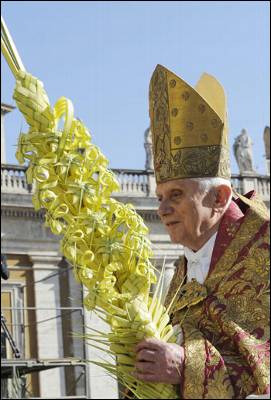
He said those that have been scarred by abortion would find the joke "a bit thin".

But he added: "In the Catholic church we are used to forgiveness, it's part of our culture to forgive people's mistakes."

Earlier this year the Pope announced 2010 would see the first papal visit to the UK since John Paul II's visit in 1982.

Pope Benedict XVI's visit will take place from 16 to 19 September, during which time he is expected to visit Birmingham, as part of the planned beatification of Cardinal John Newman, and Scotland.

The visit will come in the autumn of what is proving to be a difficult year for the Pope with a wave of allegations that Church authorities in Europe and North and South America failed to deal properly with priests accused of paedophilia.

The Pope himself has been accused of being part of a culture of secrecy and of not taking strong enough steps against paedophiles when he had that responsibility as a cardinal in Rome.

However, his supporters say he has been the most pro-active Pope yet in confronting abuse.

Sunday, March 28, 2010

Ratzinger se rebela ante las acusaciones de encubridor

Benedicto XVI ha utilizado la misa del Domingo de Ramos para cargar contra las informaciones que le acusan de encubrir casos de abusos sexuales a menores. El declaró que no se "dejará intimidar por las mezquinas habladurías de la opinión dominante", en relación a los escándalos de curas pederastas en EEUU, Irlanda, Alemania, Austria, Holanda, que han colocado en el ojo del huracán al Vaticano y salpicado al propio Pontífice.

El diario New York Times asegura que cuando era el prefecto del ex Santo Oficio, Ratzinger encubrió a un sacerdote estadounidense acusado de abusar sexualmente de unos 200 menores sordos y en la década de los años 80 cuando era arzobispo de Múnich autorizó que un sacerdote pederasta que había sido expulsado por ese motivo de la ciudad alemana de Essen, ejerciera en la capital bávara.

La insanta Sede ha desmentido categóricamente esos casos y ha denunciado una "innoble campaña" para golpearle "cueste lo que cueste". Según el diario vaticano L'Osservatore Romano, "nadie ha hecho tanto" como Benedicto XVI en la lucha contra esos abusos sexuales y menos ocultó caso alguno.
Por primera vez en sus casi cinco años de Pontificado, Benedicto XVI, que el 16 de abril cumplirá 83 años, ha presidido la homilía del Domingo de Ramos desde el "papamóvil", una medida, según el portavoz, Federico Lombardi, para que así lo pudieran ver mejor todos los fieles.

Ratzinger recordó su viaje a Tierra Santa, donde visitó los lugares de la vida, muerte y resurrección de Cristo y dijo que estaba muy "afligido" por las recientes "tensiones" verificadas "una vez más" en Jerusalén, por las nuevas construcciones judías en Jerusalén este, la zona palestina.

El pidió "a los responsables de la suerte" de la Ciudad Santa, "que es la patria espiritual de cristianos, judíos y musulmanes", que acometan con valentía el camino de la paz y lo sigan con perseverancia". Asimismo exhortó a los cristianos a permanecer en Tierra Santa, donde cada vez quedan menos.

Saturday, March 27, 2010

As Archbishop, Benedict Focused on Doctrine

The New York Times
MUNICH — When Pope Benedict XVI was archbishop of Munich and Freising, he was broadly described as a theologian more concerned with doctrinal debates than personnel matters. That, say his defenders, helps explain why he did not keep close tabs on a pedophile priest sent to his archdiocese in 1980 and allowed to work in a parish.

Yet in 1979, the year before Cardinal Joseph Ratzinger, the future pope, approved the Rev. Peter Hullermann’s move to Munich, the cardinal blocked the assignment to the local university of a prominent theology professor recommended by the university senate. And in 1981, he punished a priest for holding a Mass at a peace demonstration, leading the man to ultimately leave the priesthood.

Pope Benedict’s four-and-a-half-year tenure as archbishop is among the least-examined periods of his life, but his time presiding over 1,713 priests and 2.2 million Catholics was in many ways a dress rehearsal for his present job tending to the Roman Catholic Church’s more than one billion members worldwide.

As archbishop, Benedict expended more energy pursuing theological dissidents than sexual predators. Already in the early 1980s, one could catch a glimpse of a future pope preoccupied with combating any movement away from church tradition. Vatican experts say there is little evidence that Benedict spent much time investigating more than 200 cases of “problem priests” in the diocese, with issues including alcohol abuse, adultery and, now under the microscope, pedophilia.

“His natural habitat was the faculty lounge, and he hadn’t even been a faculty chair,” said John L. Allen Jr. of The National Catholic Reporter. “He would be the first to concede he was much more interested in the life of the mind than the nuts and bolts of administrative work.”

Andreas Englisch, a leading German Vatican expert and the author of several books on Benedict, said that Cardinal Ratzinger “was never interested in bureaucratic stuff,” and noted that when he was first asked to be archbishop of Munich, he considered turning down the post because he did not want to work as “a manager.” In his autobiography, Benedict described taking the post as “an infinitely difficult decision.”

His management decisions are now the central focus of the widening scandal in the church in Germany. His supporters say that although he approved Father Hullermann’s move to his archdiocese, they assume that he may not have paid attention to a memo informing him that the priest, who had sexually abused boys in his previous posting, was almost immediately allowed to resume parish duties.

“He certainly would not have realized anything; he was in a different sphere,” said Hannes Burger, 72, who covered the church, including during Benedict’s time as archbishop, for the Munich-based daily Süddeutsche Zeitung.

“He held beautiful sermons and wrote beautifully, but the details he left to his staff,” said Mr. Burger, who interviewed the future pope several times before he went to Rome. “He was a professorial bishop, with Rome as his goal.”

Three decades ago it was common practice in the church to ignore or cover up incidents of molestation, or, in severe cases, to transfer priests to faraway parishes. Even outside the church, both victims and law enforcement authorities were less likely to take decisive steps to expose and combat abuse.

But Benedict’s track record in handling such cases under his direct control has assumed new relevance because he presides over a church troubled by scandal. He has to weigh whether and how severely to punish bishops who failed to act to deal with abuses in their domains.

In fact, in his efforts to combat child abuse in 2010, Benedict faces a dilemma over how to handle the same kind of institutional secrecy that was practiced by his own archdiocese in 1980. The future pope himself chose “co-workers of the truth,” as the motto for his time as archbishop.

The case is alarming, wrote the German newspaper Die Zeit last week, not “because Ratzinger was guilty of an exceptional offense.”

“It is the other way around: It is significant because the archbishop acted as probably most other dignitaries in those years,” it wrote. “In 1980 Joseph Ratzinger was part of the problem that preoccupies him today.”

Benedict was a stern disciplinarian on the issue that propelled him up the church hierarchy. An early enthusiast for reform in the Catholic Church in the early 1960s, he soon changed his mind and joined the ranks of those trying to put the brakes on the liberalizing forces unleashed by the counterculture movement.

His time in Munich was marked by confrontations with the local clergy, theologians and priests who worked there at the time say.

Cardinal Ratzinger ruffled feathers almost upon arrival in Munich by ordering priests to return to celebrating First Communion and first confession in the same year, rather than having the first confession a year later, a practice that had become established over the previous decade, and which its advocates considered more appropriate for young children.

One priest, the Rev. Wilfried Sussbauer, said he wrote to the archbishop at the time questioning the change, and said Cardinal Ratzinger “wrote me an extremely biting letter” in response.

After receiving the letter, Father Sussbauer and other priests asked for an audience with their archbishop in 1977. They did not get one. But the visiting sister of President Jimmy Carter did. When the priests found out, they called Cardinal Ratzinger’s office. “We asked, ‘Who is more important, your own priests or the sister of the American president?’ ” Father Sussbauer, 77, recalled. “Then suddenly we got an appointment.”

Cardinal Ratzinger was already something of a clerical diplomat, traveling as the official representative of Pope John Paul I to Ecuador in 1978. And with two conclaves to select a new pope in 1978, it seemed at times as if the archbishop already had one foot in the Vatican.

“His predecessor as archbishop was simply more aware of the practical problems of pastoral work,” said Wolfgang Seibel, a Jesuit priest and editor of the Munich-based magazine Stimmen der Zeit from 1966 to 1998. “He didn’t have enough time to leave his mark.”

How closely he would have watched personnel decisions, especially with an administrative chief, Vicar General Gerhard Gruber, who had been in his post since 1968, is an open question. But the transfer of Father Hullermann from Essen would not have been a routine matter, experts said.

Mr. Englisch, the Vatican expert, said that transferring a problem priest was “such a difficult decision” that it would necessarily have required his opinion.

“I think the guy who handled it would have gone to his archbishop and said, ‘This case of transferring a priest is not common, and we should really have an eye on him,’ ” Mr. Englisch said. Referring to Benedict, he added, “I don’t think that he really knew the details; I don’t think he was really interested in the details.”

“As they say in the legal profession, you either knew or you should have known,” said the Rev. Thomas P. Doyle, who once worked at the Vatican Embassy in Washington and became an early and well-known whistle-blower on sexual abuse in the church. “The archbishop is the unquestioned authority in that diocese. The buck stops there.”


Rachel Donadio and Gaia Pianigiani contributed reporting from Rome.

Friday, March 26, 2010

Abuse Scandal’s Ripples Spread Across Europe


MUNICH — The fallout from the sexual abuse scandal in the Roman Catholic Church settled across Europe, as prosecutors said they were weighing criminal charges against a priest suspected of molesting children in Germany, and Pope Benedict XVI accepted the resignation of a bishop accused of mishandling allegations of abuse in Ireland.

The possibility of criminal charges emerged from new accusations against a priest at the center of the child-molesting scandal rocking the church in Germany. On Wednesday, church officials in Munich said the priest, the Rev. Peter Hullermann — whose transfer in 1980 to an archdiocese led at the time by Benedict, then Archbishop Joseph Ratzinger, has drawn the pope himself into the nation’s child abuse controversy — had been accused of molesting a minor as recently as 1998.

The latest revelation comes as church officials in northern Germany say they have “credible evidence” of at least two other cases of sexual abuse committed by Father Hullermann in the 1970s, adding to a trail of accusations that suggest a pattern of abuse over two decades. During that time, church officials repeatedly transferred Father Hullermann to new parishes and allowed him to work with children, even after a 1986 conviction for sexually abusing boys.

Father Hullermann has not returned repeated calls and hung up without comment when reached briefly on Wednesday.

At the Vatican on Thursday, a small group of abuse victims gathered to demonstrate against the church’s refusal to defrock a priest in Wisconsin implicated in the abuse of as many as 200 deaf boys, and the role the pope had played in the case when oversaw the Vatican’s doctrinal arm.

“The goal of Cardinal Ratzinger, now Pope Benedict, was to keep this secret,” Peter Isely, Midwest director of the Survivors Network of those Abused by Priests, told the Associated Press. “This is the most incontrovertible case of pedophilia you could get.”

The A.P. reported that some of the demonstrators were detained by police. In Ireland, Bishop John Magee, whose resignation was accepted by the pope on Wednesday, issued a statement of apology. In 2008, an investigation by a church panel into allegations in Cloyne found that Bishop Magee had failed to respond to accusations of abuse and that policies to protect children were severely lacking, setting off calls for his resignation.

“As I depart, I want to offer once again my sincere apologies,” said Bishop Magee, who had served as private secretary to three popes. He added, “To those whom I have failed in any way, or through any omission of mine have made suffer, I beg forgiveness and pardon.”

Bishop Magee’s was the first resignation the pope accepted since issuing a long-awaited letter to Irish Catholics last weekend apologizing to victims of sexual abuse and expressing “shame and remorse.”

Yet Benedict’s letter did not call for any church leaders to be disciplined, feeding a growing sense of anger in Ireland. Many Catholics there are demanding that the leader of the Irish church, Cardinal Sean Brady, resign over his role as a young priest in the 1970s in urging two children to sign secrecy agreements and not to report abuse.

Benedict’s letter followed two scathing Irish government reports last year revealing decades of sexual abuse of tens of thousands of children and a widespread cover-up. The findings have shaken the Irish church to its core; some fear it has lost a generation to the crisis.

Bishop Magee’s resignation accompanied a steady drumbeat for more church leaders to step down. Beyond Bishop Magee, four other Irish bishops implicated in the government reports for failing to protect children have offered to resign, but Benedict has accepted only one’s offer.

Nor has Benedict addressed the German scandal directly. So far, no cases have emerged from the two-year period when Father Hullermann worked at St. John the Baptist Church in Munich and Benedict was archbishop. But accusations have now surfaced at every other stop between Father Hullermann’s ordination in 1973 and his criminal conviction in 1986, and during a later assignment in 1998.

In a statement on Wednesday, the Munich archdiocese said the most recent potential victim had contacted the church. “The likely victim was a minor at the time,” the statement said, noting that the case had been referred to the prosecutor’s office.

“We are currently investigating the circumstances of the case,” said Eduard Mayer, the head of the prosecutor’s office handling the matter.

Church authorities have also been alerted to two previously unknown potential victims in the northern town of Bottrop. “We have two tip-offs that are so conclusive that we must proceed under the assumption that these incidents took place,” said Ulrich Lota, spokesman for the diocese in Essen, where Father Hullermann was ordained, confirming that in both cases the victims were boys.

Father Hullermann was abruptly transferred from Bottrop to Essen in 1977, but, according to Mr. Lota, there are no references in his file to abuse from that time.

Two years later, three sets of parents told the priest in charge of Father Hullermann’s new church that he had abused their children, prompting his transfer to Munich for therapy, where he was returned to parish duties.

After just over two years in Munich he was transferred once again, this time to the nearby town of Grafing. There, he abused several boys, leading to his conviction in 1986, which resulted in a suspended sentence of five years’ probation and a fine.

He then spent one year working in a nursing home before he was sent to a parish in Garching.

On Tuesday, Cardinal Friedrich Wetter, the archbishop at the time of Father Hullermann’s transfer to Garching, asked victims and their families to forgive him for allowing the priest to transfer to there during his tenure. “I am now painfully aware that I should have made a different decision at the time,” said Cardinal Wetter, who stepped down as archbishop in 2007.

Wolfgang Reichenwallner, the mayor of Garching, where Father Hullermann worked for 21 years after his 1986 conviction, said that the apology had come “awfully late” and that town officials had not been informed about the priest’s repeated transgressions.

Cardinal Wetter said he had “overestimated a person’s ability to change and underestimated the difficulties of therapeutic treatment for people with pedophile tendencies.”

The Munich archdiocese, in its initial statement on Father Hullermann’s case this month, said “the statements of the treating psychologist” were decisive in his return to parish duties.

But Dr. Werner Huth, the psychiatrist who treated Father Hullermann from 1980 to 1992, said last week that from the very outset he had repeatedly warned church officials not to allow the priest to work with children ever again.


Vatican Declined to Defrock U.S. Priest Who Abused Boys

The New York TimesBy LAURIE GOODSTEIN


Top Vatican officials — including the future Pope Benedict XVI — did not defrock a priest who molested as many as 200 deaf boys, even though several American bishops repeatedly warned them that failure to act on the matter could embarrass the church, according to church files newly unearthed as part of a lawsuit.

The internal correspondence from bishops in Wisconsin directly to Cardinal Joseph Ratzinger, the future pope, shows that while church officials tussled over whether the priest should be dismissed, their highest priority was protecting the church from scandal.

The documents emerge as Pope Benedict is facing other accusations that he and direct subordinates often did not alert civilian authorities or discipline priests involved in sexual abuse when he served as an archbishop in Germany and as the Vatican’s chief doctrinal enforcer.

The Wisconsin case involved an American priest, the Rev. Lawrence C. Murphy, who worked at a renowned school for deaf children from 1950 to 1974. But it is only one of thousands of cases forwarded over decades by bishops to the Vatican office called the Congregation for the Doctrine of the Faith, led from 1981 to 2005 by Cardinal Ratzinger. It is still the office that decides whether accused priests should be given full canonical trials and defrocked.

In 1996, Cardinal Ratzinger failed to respond to two letters about the case from Rembert G. Weakland, Milwaukee’s archbishop at the time. After eight months, the second in command at the doctrinal office, Cardinal Tarcisio Bertone, now the Vatican’s secretary of state, instructed the Wisconsin bishops to begin a secret canonical trial that could lead to Father Murphy’s dismissal.

But Cardinal Bertone halted the process after Father Murphy personally wrote to Cardinal Ratzinger protesting that he should not be put on trial because he had already repented and was in poor health and that the case was beyond the church’s own statute of limitations.

“I simply want to live out the time that I have left in the dignity of my priesthood,” Father Murphy wrote near the end of his life to Cardinal Ratzinger. “I ask your kind assistance in this matter.” The files contain no response from Cardinal Ratzinger.

The New York Times obtained the documents, which the church fought to keep secret, from Jeff Anderson and Mike Finnegan, the lawyers for five men who have brought four lawsuits against the Archdiocese of Milwaukee. The documents include letters between bishops and the Vatican, victims’ affidavits, the handwritten notes of an expert on sexual disorders who interviewed Father Murphy and minutes of a final meeting on the case at the Vatican.

Father Murphy not only was never tried or disciplined by the church’s own justice system, but also got a pass from the police and prosecutors who ignored reports from his victims, according to the documents and interviews with victims. Three successive archbishops in Wisconsin were told that Father Murphy was sexually abusing children, the documents show, but never reported it to criminal or civil authorities.

Instead of being disciplined, Father Murphy was quietly moved by Archbishop William E. Cousins of Milwaukee to the Diocese of Superior in northern Wisconsin in 1974, where he spent his last 24 years working freely with children in parishes, schools and, as one lawsuit charges, a juvenile detention center. He died in 1998, still a priest.

Even as the pope himself in a recent letter to Irish Catholics has emphasized the need to cooperate with civil justice in abuse cases, the correspondence seems to indicate that the Vatican’s insistence on secrecy has often impeded such cooperation. At the same time, the officials’ reluctance to defrock a sex abuser shows that on a doctrinal level, the Vatican has tended to view the matter in terms of sin and repentance more than crime and punishment.

The Vatican spokesman, the Rev. Federico Lombardi, was shown the documents and was asked to respond to questions about the case. He provided a statement saying that Father Murphy had certainly violated “particularly vulnerable” children and the law, and that it was a “tragic case.” But he pointed out that the Vatican was not forwarded the case until 1996, years after civil authorities had investigated the case and dropped it.

Father Lombardi emphasized that neither the Code of Canon Law nor the Vatican norms issued in 1962, which instruct bishops to conduct canonical investigations and trials in secret, prohibited church officials from reporting child abuse to civil authorities. He did not address why that had never happened in this case.

As to why Father Murphy was never defrocked, he said that “the Code of Canon Law does not envision automatic penalties.” He said that Father Murphy’s poor health and the lack of more recent accusations against him were factors in the decision.

The Vatican’s inaction is not unusual. Only 20 percent of the 3,000 accused priests whose cases went to the church’s doctrinal office between 2001 and 2010 were given full church trials, and only some of those were defrocked, according to a recent interview in an Italian newspaper with Msgr. Charles J. Scicluna, the chief internal prosecutor at that office. An additional 10 percent were defrocked immediately. Ten percent left voluntarily. But a majority — 60 percent — faced other “administrative and disciplinary provisions,” Monsignor Scicluna said, like being prohibited from celebrating Mass.

To many, Father Murphy appeared to be a saint: a hearing man gifted at communicating in American Sign Language and an effective fund-raiser for deaf causes. A priest of the Milwaukee Archdiocese, he started as a teacher at St. John’s School for the Deaf, in St. Francis, in 1950. He was promoted to run the school in 1963 even though students had disclosed to church officials in the 1950s that he was a predator.

Victims give similar accounts of Father Murphy’s pulling down their pants and touching them in his office, his car, his mother’s country house, on class excursions and fund-raising trips and in their dormitory beds at night. Arthur Budzinski said he was first molested when he went to Father Murphy for confession when he was about 12, in 1960.

“If he was a real mean guy, I would have stayed away,” said Mr. Budzinski, now 61, who worked for years as a journeyman printer. “But he was so friendly, and so nice and understanding. I knew he was wrong, but I couldn’t really believe it.”

Mr. Budzinski and a group of other deaf former students spent more than 30 years trying to raise the alarm, including passing out leaflets outside the Milwaukee cathedral. Mr. Budzinski’s friend Gary Smith said in an interview that Father Murphy molested him 50 or 60 times, starting at age 12. By the time he graduated from high school at St. John’s, Mr. Smith said, “I was a very, very angry man.”

In 1993, with complaints about Father Murphy landing on his desk, Archbishop Weakland hired a social worker specializing in treating sexual offenders to evaluate him. After four days of interviews, the social worker said that Father Murphy had admitted his acts, had probably molested about 200 boys and felt no remorse.

However, it was not until 1996 that Archbishop Weakland tried to have Father Murphy defrocked. The reason, he wrote to Cardinal Ratzinger, was to defuse the anger among the deaf and restore their trust in the church. He wrote that since he had become aware that “solicitation in the confessional might be part of the situation,” the case belonged at the doctrinal office.

With no response from Cardinal Ratzinger, Archbishop Weakland wrote a different Vatican office in March 1997 saying the matter was urgent because a lawyer was preparing to sue, the case could become public and “true scandal in the future seems very possible.”

Recently some bishops have argued that the 1962 norms dictating secret disciplinary procedures have long fallen out of use. But it is clear from these documents that in 1997, they were still in force.

But the effort to dismiss Father Murphy came to a sudden halt after the priest appealed to Cardinal Ratzinger for leniency.

In an interview, Archbishop Weakland said that he recalled a final meeting at the Vatican in May 1998 in which he failed to persuade Cardinal Bertone and other doctrinal officials to grant a canonical trial to defrock Father Murphy. (In 2002, Archbishop Weakland resigned after it became public that he had an affair with a man and used church money to pay him a settlement.)

Archbishop Weakland said this week in an interview, “The evidence was so complete, and so extensive that I thought he should be reduced to the lay state, and also that that would bring a certain amount of peace in the deaf community.”

Father Murphy died four months later at age 72 and was buried in his priestly vestments. Archbishop Weakland wrote a last letter to Cardinal Bertone explaining his regret that Father Murphy’s family had disobeyed the archbishop’s instructions that the funeral be small and private, and the coffin kept closed.

“In spite of these difficulties,” Archbishop Weakland wrote, “we are still hoping we can avoid undue publicity that would be negative toward the church.”


Rachel Donadio contributed reporting from Rome.

Document Trail: The Predator Priest Who Got Away

Monday, March 15, 2010

How paedophile priest was allowed to evade justice


Watch Olenka Frenkiel's investigation in full
Former priest Bill Carney was named as one of the worst cases in Dublin's Catholic diocese in the Murphy report into clerical abuse there. However, for the last 10 years he has been free to live quietly in Britain.
Newsnight's Olenka Frenkiel has investigated his case and tracked him down in the Canary Islands.

Bill Carney
Carney used to invite children to his house in Ayrfield to watch videos
All the children in Ayrfield, Dublin, knew fun-loving Father Bill Carney - not just the altar boys and those who met him through school, but members of the Scout troop he ran and the groups of local children he took swimming.
His door was always open, there was a ready supply of Coke in the fridge and in the 1980s he had the very latest thing to lure youngsters in - a video player.
Adults disapproved of his swearing and crazy driving, but the Catholic Church was still so trusted, no-one suspected the truth about him.
Bridie Dwyer still lives in Ayrfield. Above the fireplace, with other family photographs is a picture of her youngest child, Paul, on his first Communion day.
At the age of 13 Paul went with other boys to watch videos at Father Carney's house and to have a sleepover, Mrs Dwyer told me. But at 2am Paul unexpectedly returned home.
"Thought you were going for a sleepover?" she recalled asking him as he pushed past her. "Didn't want to stay," he replied and shut his door.
Paul Dwyer
Carney is accused of raping Paul Dwyer when Paul was 13
"That's when he'd been raped," Mrs Dwyer told me, "but I didn't know".
What no-one, except Carney's bishop and the local police, knew was that the priest was a paedophile.
The Murphy report into the cover up by the Catholic Church and Irish state of clerical sex abuse was published in November 2009.
It described Carney as "a serial sexual abuser of children, male and female", saying that there had been complaints and suspicions "in respect of 32 named individuals" about him, adding that "there is evidence he abused many more children".
'Child in his bed'
Michael Wheeler, who as a boy was one of Carney's altar servers, said that following the report a strange but vivid memory from when he was young suddenly made sense.
He told me that when he was nine years old Carney was late for Mass one day, so, fearful that he might not turn up, he ran into the priest's house and called his name.
Bridie Dwyer
He wanted Carney in court so he could ask him why, why had Carney raped him? That never happened and the way things are going, the way the police and the clergy are handling it now I can't see it ever happening
Bridie Dwyer, mother of Paul
"I heard a groan," he said, "and I saw in the bedroom, a boy, a little older than me, naked between the sheets.
"This boy sat up, stared groggily at me, and fell back into the bed. I was terrified and ran out. As a child I couldn't understand why he was there. Now I know."
We now know that complaints about Carney were diverted away from the Irish criminal justice system to Bishop James Kavanagh, a man described by the Murphy Report as someone with "a soft spot for Carney".
Kavanagh did what he could to protect Carney from the law to avoid scandal for the Church.
One conscientious policeman, praised in the Murphy Report, did investigate complaints and they came to court. But the press were kept away as Carney pleaded guilty to two counts of indecent assault and got probation.
Six families were paid compensation and Carney was soon back working, with access to children.
Paid to leave parish
Carney on wedding day
Carney got married in Scotland in 2004
In its 40 pages on Carney, the Murphy report said that his was one of the worst cases the commission investigated and that the Church's handling of his case was "nothing short of catastrophic".
"It was inept, self-serving and for the best part of 10 years displayed no obvious concern for the welfare of children," the report said.
In 1992, the Church convicted Carney internally, under Canon law, of child sexual abuse.
But this compulsive paedophile refused to leave the parish house. So the Church paid him £30,000 to go away.
He moved to Cheltenham and then to Scotland, where he has lived for the last 10 years running a family-friendly guest house in St Andrews.
Back in Dublin, it took Bridie's son Paul Dwyer 21 years to come forward, but in 2004 he told the police about his rape.
The police said they had received two other complaints like his and sent the file to the Irish director of public prosecutions (DPP), but the DPP said there was not enough evidence to prosecute.
"So the case stopped," his mother told me, "and, a couple of weeks later Paul committed suicide. He couldn't handle it any more.
"He wanted Carney in court so he could ask him why, why had Carney raped him? That never happened and the way things are going, the way the police and the clergy are handling it now I can't see it ever happening," she added.
No warnings given
That same year, in Scotland, Carney got married.
Newsnight has established that the Irish authorities knew his address but no-one, either from the Church or the Irish state, thought to warn his new wife about his past, or protect any children who might be at risk.
His refusal to acknowledge his paedophilia means the prognosis for a cure is bleak
Psychiatric assessment of Carney in Murphy report
Nothing was done to prevent him leaving, as usual, for his winter holiday in the Canary Islands, a popular destination for families with children, and no-one warned the local police.
The Murphy report quotes a psychiatric assessment which says he suffers from a "psychopathic personality disorder".
"His refusal to acknowledge his paedophilia," it said, "means the prognosis for a cure is bleak".
Confronted over abuse
I tracked Carney down in the Canary Islands, first at a restaurant on the sea front and then to the flat where he was staying, to ask about the abuse.
He refused to comment on the Murphy report, saying he had not read it.
He claimed that when he pleaded guilty to child sex abuse in 1983 it was not because he was guilty, but because: "I was told if I plead guilty the press would be kept away."
When I asked "Why did you rape Paul Dwyer?" his response was: "Rape. I'd like to explain that. Put it into context."
Bishop James Kavanagh
Bishop James Kavanagh protected Carney from the law
What kind of context, I asked, could excuse the rape of a child? But he did not answer.
And when I asked "Are you still abusing children?" his answer begged more questions.
"I haven't done that in 26 years and I have had no inclination," he said. But he refused to be drawn on whether that was admission that he had abused before.
Assistant Garda Commissioner John O'Mahoney has been assigned the task of investigating whether anyone should be prosecuted as a result of the revelations in the Murphy report.
These investigations, his office has said, are ongoing.
In Britain, the Home Office said that because Carney's two convictions for indecent assault pre-date the 2003 Sex Offender's Act and took place in Ireland he would not be on the Sex Offenders Register and would pass unseen through the new stricter vetting procedures for child protection.
Carney meanwhile remains free to disappear beneath the radar.