Translation

.يولد جميع الناس أحرارا متساوين في الكرامة والحقوق. وقد وهبوا عقلا وضميرا وعليهم أن يعامل بعضهم بعضا بروح الإخاء‎
FoxLingo German Spanish French Arabic Czech Greek Hungarian Italian Polish Portuguese Romanian Russian Serbian Slovenian Thai Turkish
Showing posts with label corruption. Show all posts

Saturday, July 3, 2010

UK Rejects ACTA Calls To Criminalize Illicit File-Sharing

A leaked ACTA document published by citizen advocacy group La Quadrature du Net revealed the intention to introduce criminal sanctions into the Anti-Counterfeiting Trade Agreement (ACTA) for file-sharing offenses.

The ACTA Chapter 2 Criminal Provisions document (.pdf) stated that “each party shall provide for effective proportionate and dissuasive penalties” to include “imprisonment and monetary fines”.

“The ACTA agreement, by its opacity and undemocratic nature, allows criminal sanctions to be simply negotiated,” commented Jérémie Zimmermann, spokesperson for La Quadrature du Net. “The leaked document shows that the EU Member States are willing to impose prison sanctions for non-commercial usages of copyrighted works on the Internet as well as for ‘inciting and aiding’, a notion so broad that it could cover any Internet service or speech questioning copyright policies.”

As noted by Zimmermann, the ACTA text includes proposals to apply criminal sanctions to “infringements that have no direct or indirect motivation of financial gain”. There are suggestions that “financial gain” could simply be obtaining anything without paying.

However, it seems that at least one country is showing a reluctance to go along with suggestions that file-sharers should feel the full weight of a criminal court. The UK Government has now said that it feels that criminal sanctions are an inappropriate way to deal with this type of copyright infringement.

“Acta should not introduce new intellectual property laws or offences. Instead, it should provide a framework to better enforce existing laws,” a UK Intellectual Property Office representative told ComputerActive.

Currently, personal-use file-sharing on a non-commercial scale is almost always considered a civil offense in the UK. However, there have been exceptions. In the case of the OiNK uploaders (who actually uploaded very little indeed), their cases were heard in a criminal court and they ultimately received fines and community service orders. This proves that when powerful enough people get involved, it’s trivial to escalate an offense way above its standing.

That said, it would be ridiculous to have small infringements dealt with by the criminal courts as a matter of course, so hopefully the UK Government stands strong. Jim Killock, Chief Executive at the Open Rights Group said the Government now needs to make its opposition to these proposals both public and clear to the US and EU.

Tuesday, June 22, 2010

Wikileaks plans to release files about deadly U.S. airstrike on Afghan civilians

washingtonpost.com
By Ellen Nakashima
Washington Post Staff Writer

Wikileaks.org plans to release as soon as this week documents related to a U.S. airstrike that killed Afghan civilians last year and plans to release combat footage of the incident this summer, the founder of the whistleblower site said in an interview Monday.

Julian Assange said the documents pertain to an attack near the Afghan village of Garani, which killed scores of civilians in May 2009

In April, Wikileaks released video footage of a U.S. Apache helicopter attack in Iraq that killed several civilians, including two employees of the Reuters news service. The release catapulted Wikileaks into global headlines and sparked debate over a site that aims to uncover government and corporate secrets.

Assange said Wikileaks does not try to identify sources. He also said he did not know whether Pfc. Bradley Manning, an Army intelligence analyst, was the source. Manning reportedly claimed to have given the Garani and the Iraq videos to Wikileaks.

"We don't verify sources," Assange said. "We verify documents."

Wikileaks has nonetheless secured three American lawyers, pro bono, to help Manning, 22, who is being held in Kuwait for allegedly leaking classified videos and documents to the whistleblower site. Daniel Schmitt, a spokesman for the group, said those lawyers have not had access to Manning.

"We seem to be stuck at a very early stage, which is that only lawyers representing Mr. Manning are allowed to contact him, but only Mr. Manning could tell what lawyers do represent him," Schmitt said, calling the situation "a bit like a catch-22."

Manning has been assigned a lawyer with the Judge Advocate General Corps, Capt. Paul Bouchard. An Army spokesman said he was unaware whether Manning had retained civilian counsel.

Under law, a service member's detention must be upheld by a military magistrate. The service member may be held as long as an investigation is pending but must be charged within a "reasonable" time, depending on the complexity of the investigation, according to Lt. Col. Chris Carrier, an attorney for the Army Judge Advocate General Corps in Washington

Assange, in his first public appearance since Manning's arrest, voiced concern about Manning's detention without charge and without access to a private lawyer. At a European Parliament panel in Brussels, the Wikileaks founder also took questions about his own security.

His whereabouts had been the subject of much speculation in recent weeks -- he canceled two appearances in the United States -- amid reports suggesting that U.S. authorities were seeking his arrest. Assange said that there had been "uncertainty for a period" but that intermediaries have indicated he is not the target of any manhunt.
The Army has said it is investigating Manning but has not detailed the files that might have been leaked. A former hacker who struck up an online correspondence with Manning has said he turned Manning in to authorities after the 22-year-old confided in him that he had shared sensitive videos and hundreds of thousands of State Department cables with Wikileaks.

Assange said that "as far as we can determine," Wikileaks does not have those cables. "We have tried hard to understand whether we have that material," he said.

According to U.S. officials, the cables Manning purportedly leaked would amount to about half a year's worth. The cables would include political reporting, much of which would probably be fairly innocuous. But State Department officials have expressed concerned about the disclosure of sources, which could be embarrassing or could chill normal diplomatic relations.

Manning's case is but the latest instance in which the government has investigated alleged leakers or whistleblowers. Still, prosecutions in leaking cases are rare.

Schmitt, the Wikileaks spokesman, referred to a challenge for leakers: the difficulty of remaining anonymous. Manning, for instance, was said to have been detained after detailing his actions to a relative stranger, Adrian Lamo, whom he met online.

Said Schmitt: "From a human perspective, it is very difficult for any of our potential sources, if you're contributing to exposing something that is unjust or corrupt . . . you're the only one who is taking any risk in the whole story and you're not paid by anyone, not getting covered, not getting famous for breaking the scoop."

Staff writer Glenn Kessler contributed to this report.

Sunday, June 20, 2010

Martyrs of the Green Movement

by MUHAMMAD SAHIMI in Los Angeles

19 Jun 2010 19:3517 Comments
Names of 110 killed in political violence over the past year.

The Iranian year of 1388 ended on March 20, 2010. It was one of the most turbulent years in the country's modern history. Its beginning and end were both marked by much promise, but for completely different reasons. The year had begun with the hope that the presidential election of June 12, 2009, would result in the election of a candidate with a vision for a better Iran -- a more open, more tolerant society, with less corruption, no political crimes, freedom of the press, and freedom of thought. This hope was dashed when the hardliners rigged the election and declared Mahmoud Ahmadinejad the "victor."

But precisely due to this antidemocratic fraud, the Green Movement that had arisen before the election gathered strength. It spread its wings and presented to the world a completely different image of Iran: a country with a young, educated, dynamic population that is willing to stand up to the forces of oppression and repression, express itself eloquently, and sacrifice for a better future. Thus, as Iran begins its new year, there is renewed hope.

Mousavi-supporter-Azadi-square-Tehran.jpgThe past year also recorded the largest number of Iranian people who lost their lives due to political violence since the bloody summer of 1988 (1367 in the Iranian calendar), when about 4,500 political prisoners were executed. The riots that erupted in mid-1992 and, particularly, the Eslamshahr riots of April 1995 did result in many deaths (though still not as many as in 2009), but they had mostly to do mostly with people's anger over rampant inflation and lack of basic services and were not fundamentally political.

How many people were murdered in 1388 due to political violence? No one really knows, and in a nation where there is virtually no independent press to serve as a watchdog, it is very difficult to get an accurate estimate of the total number of casualties. We can, however, distinguish between two groups among those confirmed as dead. In one group are those whose families have declared the martyrdom of their loved ones to the two committees that Mir Hossein Mousavi and Mehdi Karroubi have set up for compiling the list of the killed. In the second group are those whose families have been under tremendous pressure not to report the death of their loved ones to the two committees, and not to speak to the press.

The credible Iranian sources reporting on the number of people killed include Norooz News, the website of the Islamic Iran Participation Front, Iran's largest political party and leading reformist group; Kalame, Mousavi's official website; and Kalameh Sabz, Jonbeshe-Rah-e Sabz, and Aras News, three reformist news sites supportive of the Green Movement. In a few cases, news wires aligned with the hardliners, such as the Fars News Agency, which is controlled by the Islamic Revolutionary Guard Corps, have also confirmed the deaths of demonstrators or those who were arrested.

Several organizations have also published lists of people whose deaths have been confirmed by multiple credible sources. One is the League for the Defense of Human Rights in Iran. Its list of confirmed murders, containing more than 100 names, was first published in August 2009 and updated on March 10, 2010. A list of 72 names was published by Aseman Daily News in September 2009. Norooz News just published the precise addresses of the graves of 50 people in Tehran's Behesht-e Zahra cemetery.

What follows is the list of 107 confirmed dead collated from all of the credible sources. Their age, if known, is in parentheses. First, a few statistics: 13 of the killed (12 percent) were women; at least 23 of them were university students (22 percent); two were tortured to death; two were journalists. In several cases, there is no information about how the victims were killed -- all we know is the location of their graves.
1. Neda Agha Soltan (27), university student, murdered on June 20, 2009, in Tehran.
2. Kianoush Asa, university student, killed on June 15, 2009, in Tehran.
3. Behzad Aghazadeh Ghahramani, murdered on July 17, 2009, after the Friday prayers in Tehran led by former president Ali Akbar Hashemi Rafsanjani.
4. Morad Aghasi, murdered on July 17, 2009, in the Kahrizak detention center on the southern edge of Tehran.
5. Mina Ehterami, university student, killed on June 15, 2009, in the attack on the Tehran University dormitory.
6. Hossein Akhtar Zand (32), murdered on June 15, 2009, in Shiraz.
7. Arman Estakhripour (18), beaten to death on July 13, 2009, in Shiraz.
8. Neda Asadi; nothing is known about the circumstances of her death.
9. Amir Eslamian, university student, working for Mousavi's campaign; his body was discovered on November 27, 2009, in Boukan.
10. Saeed Esmaeili Khanbebin (23), hit in the head and killed.
11. Sohrab Erabi (19), pre-university student, murdered in Evin Prison on June 20, 2009.
12. Alireza Eftekhari (29), journalist, killed by hits to the head on June 15, 2009; his body was given to his family the following month.
13. Naser Amirnejad (26), university student in aerospace engineering, killed in Yasouj.
14. Mohsen Entezami, murdered in the Kahrizak detention center on July 14, 2009.
15. Vahed Akbari (34), killed on June 20, 2009, after his arrest in Tehran's Vanak Square.
16. Hossein Akbari, killed by hits to the head on July 26, 2009.
17. Mohsen Imani, university student, killed in the attack on the Tehran University dormitory on June 15, 2009.
18. Fatemeh Barati, university student, killed in the attack on the Tehran University dormitory on June 15, 2009.
19. Mohammad Hossein Barzegar (25), killed by a bullet to his head, after being arrested in Tehran's Haft-e Teer Square on June 17, 2009.
20. Yaghoub Boroayeh, university student, killed by a bullet on June 25, 2009.
21. Jafar Boroayeh, assistant professor at the University of Ahwaz, killed by a bullet to his head on June 28, 2009.
22. Sorour Borouman (58), killed on June 15, 2009, in Tehran.
23. Hamed Besharati (26), blogger and poet; nothing is known about the circumstances of his death.
24. Jahanbakhsh Pazouki (31), killed by a knife on December 28, 2009 (Day of Ashura).
25. Mohammad Javad Parandakh, university student; nothing is known about how he was killed.
26. Dr. Ramin Pourandarjani, physician on duty in the Kahrizak detention center, presumably poisoned on November 10, 2009.
27. Amir Arshaf Tajmir, killed on December 28, 2009 (Day of Ashura) in Tehran.
28. Farzad Jashni, killed on June 20, 2009.
29. Somayyeh Jafargholi, university student, killed by a bullet on September 27, 2009.
30. Bahman Jenabi; nothing is known about the circumstances of his death.
31. Amir Javadifar, university student, arrested on July 9, 2009; died in prison.
32. Moharram Chegini Gheshlaghi (35); nothing is known about how he was murdered.
33. Mohsen Haddadi (24), computer programmer, killed by a bullet to his forehead on June 23, 2009.
34. Ali Hassanpour, killed on June 15, 2009, in Tehran's Azadi Square; his body was given to his family 105 days later.
35. Amir Mehdi Hamzehlouei, killed in Gheyterieh Park in Tehran on October 2, 2009.
36. Hesam Hanifeh (19), killed by a bullet to his chin on June 16, 2009.
37. Mehrdad Heidari, journalist, killed on July 13, 2009, in Mashhad.
38. Masoud Khosravi, killed in Tehran's Azadi Square on June 15, 2009.
39. Sh. Khezri, university student, killed in Tehran's Baharestan Square on June 15, 2009.
40. Abbas Disnad (40), killed by hits to his head on June 20, 2009; his body was given to his family after $15,000 was paid.
41. Mohammad Raeis-Najafi, beaten to death near Tehran's Azadi Square on June 15, 2009.
42. Mohammad Ali Rasekhi-Nia (40), killed by a bullet on December 28, 2009 (Day of Ashura).
43. Fatemeh Rajabpour (38), killed with her mother, Ms. Borouman (number 22 above).
44. Shahrokh Rahmani (26), run over by a car on December 28, 2009 (Day of Ashura) in Tehran.
45. Dr. Rahimi; nothing is known about the circumstances of his death.
46. Hamid Rezaei, killed on January 1, 2010, in Homayounshahr.
47. Ramin Ramazani (22); nothing is known about how he was murdered.
48. Mohsen Ruhol-amini (25), university student, killed in the Kahrizak detention center.
49. Babak Sepehr (35); nothing is known about how he was killed.
50. Fahimeh Selahshour (25), killed by hits to her head in Tehran's Vali-Asr Square on June 14, 2009.
51. Fatemeh Semsarpour, killed by a bullet on June 20, 2009, near Tehran's Azadi Square.
52. Ashkan Sohrabi (18), high school student, killed by a bullet in Tehran on June 20, 2009.
53. Tina Soudi, university student, killed by a bullet on June 20, 2009, in Tehran's Enghelab Square.
54. Hassan Shapouri, killed on July 14, 2009.
55. Ali Shahnazar (41), killed on September 29, 2009.
56. Ali Shahedi (24), killed on June 21, 2009, while detained by police.
57. Kasra Sharafi, university student, killed in the attack on the Tehran University dormitory on June 15, 2009.
58. Kambiz Shoaei, university student, killed in the attack on the Tehran University dormitory on June 15, 2009.
59. Shafi' Nejad, killed on June 15, 2009.
60. Zahed Shekarabi (20), tortured to death in Esfahan on July 21, 2009.
61. Yousef Saleh; nothing is known about how he was murdered.
62. Davoud Sadri (27), killed by a bullet on June 15, 2009, in Tehran; his body was given to his family after $6,000 was paid, plus a $350 charge for the bullet.
63. Seyyed Reza Tabatabaei (30), killed by a bullet to his head on June 20, 2009, in Tehran.
64. Vahid Reza Tabatabaei (29), killed by a bullet to his head on June 26, 2009, in Tehran.
65. Hossein Toufanpour, killed by a bullet to his head on June 20, 2009, in Tehran.
66. Hossein Tahmasebi (25), killed when his head was repeatedly hit by an object on June 15, 2009, in Kermanshah.
67. Salar Tahmasebi (27), university student, killed by a bullet to his head on June 20, 2009, in Tehran.
68. Maysam Ebadi, killed by a bullet to his abdomen on June 13, 2009, in Tehran's Sadeghieh Square.
69. Saeed Abbasi (28), killed on June 20, 2009; his body was given to his family after $8,000 was paid.
70. Abolfazl Abdollahi (21), killed by a bullet to his head on June 20, 2009, in Tehran.
71. Hamid Araghi, killed by a bullet on June 27, 2009; his family, initially told to pay $12,000 for his body, eventually paid $5,000.
72. Kaveh Alipour (19), killed on June 20, 2009; his family paid $3,000 to get his body.
73. Mostafa Ghanyan, university student, killed in the attack on the Tehran University dormitory on June 15, 2009.
74. Reza Fattahi, university student, killed in the Kahrizak detention center on July 14, 2009.
75. Ali Fathalian, killed in Tehran; nothing else is known.
76. Shahram Faraji (30), killed on December 28, 2009 (Day of Ashura) in Tehran.
77. Mehdi Farhadirad (34), killed by a bullet to his face on December 28, 2009 (Day of Ashura) in Tehran.
78. Mohammad Hossein Fayzi (28); nothing is known about how he was killed.
79. Sajjad Ghaed Rahmati; nothing is known about how he was murdered.
80. Salar Ghorbani Param (22); nothing is known about how he was murdered.
81. Rahim Mahmoudpour, killed by a bullet on August 3, 2009, in Tehran.
82. Hamid Maddah Shourcheh, university student, killed after his head was repeatedly hit by an object.
83. Moazzez (27), killed by a bullet to his eye on June 20, 2009, near Tehran's Azadi Square.
84. Pouya Azadbeigi, arrested on June 20, 2009, and died soon after his release.
85. Dr. Moghsoudlou; nothing is known about the circumstances of his murder.
86. Behzad Mohajer (47), killed by a bullet to his heart on June 15, 2009.
87. Maryam Mehraaein (24); nothing is known about how she was murdered.
88. Taraneh Mousavi, murdered on June 28, 2009.
89. Seyyed Ali Mousavi Habibi (42), nephew of Mir Hossein Mousavi, assassinated on December 28, 2009 (Day of Ashura) in Tehran.
90. Mostafa Mirebrahimi (22), killed under torture in August 2009.
91. Mohammad Naderipour, university student and Mousavi campaign worker.
92. Nader Naseri, killed on June 20, 2009, in Tehran.
93. Ahmad Nejati, killed by hits to his head.
94. Ahmad Naeimabadi, killed by a bullet in Tehran's Azadi Square.
95. Iman Namazi, university student, killed in the attack on the Tehran University dormitory on June 15, 2009.
96. Mohammad Ali Nikzadi (22), architect, killed by a bullet to his abdomen on June 16, 2009, in Tehran.
97. Masoud Hashemzadeh, killed by a bullet on June 20, 2009, in Tehran.
98. Iman Hashemi (27), killed by a bullet to his eye on June 20, 2009, in Azadi Street in Tehran.
99. Mostafa Kashani Rasa, Mousavi campaign worker, killed by a bullet at the campaign headquarters in Gheytarieh, Tehran, on June 14, 2009.
100. Mohammad Kamrani (18), died in Tehran's Mehr Hospital.
101. Mehdi Karami (25), killed by a bullet to his neck on June 15, 2009, in Tehran.
102. Mostafa Karim Beigi (27), murdered by a bullet to his head on October 27, 2009.
103. Parisa Kolli (25), university graduate, killed by a bullet to her neck on June 21, 2009, in Tehran.
104. Majid Kamali (23), killed on August 25, 2009.
105. Amir Kaviri; nothing is known about how he was murdered.
106. Mostafa Kiarostami (22), killed by hits to his head on July 17, 2009.
107. Milad Yazdanpanah (30), killed by a bullet in Azadi Street in Tehran.
Three other people lost their lives for the Green Movement. One is Mohammad Asghari, who was a computer expert and worked for the office of computer security at the Ministry of Interior. He leaked a considerable amount of information about the actual vote count after the rigged June 2009 election and mysteriously lost his life in a car accident soon thereafter. It is widely believed that he was murdered.

The other two are Mohammad Reza Ali Zamani (37) and Arash Rahmanipour (19). They had been arrested before the election, but were hanged in early January 2010 in what is widely believed to be a message to the supporters of the Green Movement that they too could be hanged. Neither one had committed any serious offense.
In addition, Dr. Masoud Ali-Mohammadi, professor of physics at the University of Tehran, was assassinated. There is considerable evidence that he was murdered by the hardliners, although this is not a certainty.

These are freedom fighters who lost their precious lives for their ideals. Their place in history is assured. The Iranian people will never forget them.

Mir Hossein Mousavi has declared 1389 the year of patience, resistance against the hardliners, and efforts to achieve citizens' legal rights. Certainly, those who have lost loved ones need a lot of patience. Let us hope that by the end of the year Iran will be well on its way to a democratic society, so that those who lost their loved ones can see the fruits of their sacrifice.

Muhammad Sahimi is a columnist for Tehran Bureau.

Copyright © 2010 Tehran Bureau

Saturday, June 19, 2010

New autopsy for Egypt 'police beating victim'

Activist with image of Khaled Said

Activists marched in Egyptian cities to demand a new probe into the death

A second autopsy has been ordered for a young man who human rights activists claim was killed by police in Egypt.

Khaled Said, 28, died on 6 June after plainclothes policemen reportedly tried to search him in an Alexandria cafe.

His family and campaigners claim he was dragged out and beaten to death on a busy street in full view of passersby. His death led to angry demonstrations.

Egypt's interior ministry said Mr Said died after swallowing a bag of drugs when police tried to arrest him.

Prosecutor General Abdel-Meguid Mahmoud transferred the case to Egypt's most senior coroners on Tuesday.
 
Street protests
The United States expressed concern over the death in the northern port city, and Washington welcomed Cairo's decision to launch an investigation.

"We urge the Egyptian authorities to hold accountable whoever is responsible," State Department spokesman Philip Crowley was quoted as saying by AFP news agency.

Campaigners took to the streets of Alexandria and Cairo to demand a fresh investigation after the interior ministry said Mr Said died after swallowing drugs.

Photos of Mr Said's battered face have been circulated in Egypt by human rights activists.

They say his death is evidence that Egypt's emergency law has created a culture of police impunity.

The law, which has been in place for nearly 30 years since the assassination of President Anwar Sadat by an Islamic militant, was recently renewed for a further two years.

Egypt's parliament has said that new legal limits would be introduced, guaranteeing that the law would be used only to counter terrorism and trade in illegal drugs.

But the government's political opponents also claim the legislation is used to target them in the name of national security.

Saturday, March 27, 2010

DR Congo: Lord’s Resistance Army Rampage Kills 321

Regional Strategy Needed to End Rebel Group’s Atrocities and Apprehend Leaders
2010_DRC_LRA1.jpg

The Makombo massacre is one of the worst ever committed by the LRA in its bloody 23-year history, yet it has gone unreported for months. The four-day rampage demonstrates that the LRA remains a serious threat to civilians and is not a spent force, as the Ugandan and Congolese governments claim.
Anneke Van Woudenberg, senior Africa researcher
(Kampala) - The rebel Lord's Resistance Army (LRA) killed at least 321 civilians and abducted 250 others, including at least 80 children, during a previously unreported four-day rampage in the Makombo area of northeastern Democratic Republic of Congo in December, 2009, Human Rights Watch said in a report released today.

"The Makombo massacre is one of the worst ever committed by the LRA in its bloody 23-year history, yet it has gone unreported for months," said Anneke Van Woudenberg, senior Africa researcher at Human Rights Watch. "The four-day rampage demonstrates that the LRA remains a serious threat to civilians and is not a spent force, as the Ugandan and Congolese governments claim."

The 67-page report, "Trail of Death: LRA Atrocities in Northeastern Congo," is the first detailed documentation of the Makombo massacre and other atrocities by the LRA in Congo in 2009 and early 2010. The report, based on a Human Rights Watch fact-finding mission to the massacre area in February, documents the brutal killings during the well-planned LRA attack from December 14 to 17 in the remote Makombo area of Haute Uele district.

LRA forces attacked at least 10 villages, capturing, killing, and abducting hundreds of civilians, including women and children. The vast majority of those killed were adult men, whom LRA combatants first tied up and then hacked to death with machetes or crushed their skulls with axes and heavy wooden sticks. The dead include at least 13 women and 23 children, the youngest a 3-year-old girl who was burned to death. LRA combatants tied some of the victims to trees before crushing their skulls with axes.

The LRA also killed those they abducted who walked too slowly or tried to escape. Family members and local authorities later found bodies all along the LRA's 105-kilometer journey through the Makombo area and the small town of Tapili. Witnesses interviewed by Human Rights Watch said that for days and weeks after the attack, this vast area was filled with the "stench of death."

Children and adults who managed to escape provided similar accounts of the group's extreme brutality. Many of the children captured by the LRA were forced to kill other children who had disobeyed the LRA's rules. In numerous cases documented by Human Rights Watch, children were ordered to surround the victim in a circle and take turns beating the child on the head with a large wooden stick until the child died.

The United Nations Peacekeeping Mission in Congo (MONUC) has some 1,000 peacekeeping troops in the LRA-affected areas of northeastern Congo - far too few to protect the population adequately, given the area's size.  Yet instead of sending more troops, the peacekeeping force, under pressure from the Congolese government to withdraw from the country by July 2011, is considering removing some troops from the northeast by June in the first phase of its drawdown.

"The people of northeastern Congo are in desperate need of more protection, not less," said Van Woudenberg. "The UN Security Council should stop any drawdown of MONUC peacekeeping troops from areas where the LRA threatens to kill and abduct civilians."

In mid-April, the Security Council is due to visit Congo to discuss the peacekeeping force's   plans for withdrawal and the protection of civilians.
The Makombo massacre is part of a longstanding history of atrocities and abuse by the LRA in Uganda, southern Sudan, the Central African Republic (CAR), and Congo. Pushed out of northern Uganda in 2005, the LRA now operates in the remote border area between southern Sudan, Congo, and CAR. In July 2005, the International Criminal Court issued arrest warrants for the senior leaders of the LRA for crimes they committed in northern Uganda, but those indicted remain at large.

The Human Rights Watch research indicated that the Makombo massacre was perpetrated by two LRA commanders - Lt. Col. Binansio Okumu (also known as Binany) and a commander known as Obol. They report to Gen. Dominic Ongwen, a senior LRA leader who is believed to command the LRA's forces in Congo and who is among those sought by the International Criminal Court. Human Rights Watch urged investigations of these commanders' alleged participation in war crimes and crimes against humanity.

In December 2008, the governments of the region, led by the Ugandan armed forces, with intelligence and logistical support from the United States, began a military campaign known as Operation Lightning Thunder against the LRA in northeastern Congo. A surprise aerial strike on the main LRA camp failed to neutralize the LRA leadership, which escaped. In retaliation, the LRA attacked villages and towns in northern Congo and southern Sudan, killing more than 865 civilians during the Christmas 2008 holiday season and in the weeks thereafter.

On March 15, 2009, Operation Lightning Thunder officially ended, following pressure from the Congolese government, which found it politically difficult to support a continued Ugandan army presence on Congolese territory. But a covert joint military campaign continued, with the quiet approval of the Congolese president, Joseph Kabila. Both governments publicly maintain that the LRA is no longer a serious threat in Congo and that the bulk of the rebel group has either moved to Central African Republic or has been killed or dispersed.

These public declarations might have contributed to burying information about ongoing LRA attacks, leaving many victims feeling abandoned. An 80-year-old traditional chief, whose son was killed during the Makombo massacre, told Human Rights Watch: "We have been forgotten. It's as if we don't exist. The government says the LRA are no longer a problem, but I know that's not true. I beg of you, please talk to others about what has happened to us."

While the Makombo massacre is the most deadly documented attack by the LRA since the Christmas massacres of 2008, dozens of attacks against civilians have also been carried out in other areas in recent months - near the towns of Bangadi and Ngilima in Haut Uele district, in Ango territory in Bas Uele district, as well as in the Central African Republic.

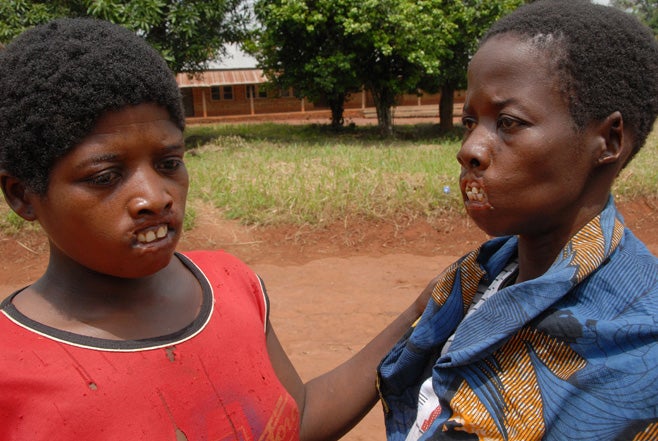
In the December 2009 attacks near Bangadi and Ngilima, LRA combatants horribly mutilated six civilians, cutting off each victim's lips and an ear with a razor. The LRA sent the victims back to their villages with a chilling warning to others that anyone who heard or spoke about the LRA would be similarly punished.

On March 11, 2010, the US Senate unanimously passed the Lord's Resistance Army Disarmament and Northern Uganda Recovery Act. If it becomes law, it will require President Barack Obama's administration to develop a regional strategy to protect civilians in central Africa from attacks by the LRA, to work to apprehend the LRA's leadership, and to support economic recovery for northern Uganda. The bill is currently before the House Committee on Foreign Affairs.

"The people of northeastern Congo and other LRA-affected areas have suffered for far too long," said Van Woudenberg. "The US and other concerned governments should work with the UN and regional parties to develop and carry out a comprehensive strategy to protect civilians and apprehend abusive LRA leaders."

As Archbishop, Benedict Focused on Doctrine

The New York Times
MUNICH — When Pope Benedict XVI was archbishop of Munich and Freising, he was broadly described as a theologian more concerned with doctrinal debates than personnel matters. That, say his defenders, helps explain why he did not keep close tabs on a pedophile priest sent to his archdiocese in 1980 and allowed to work in a parish.

Yet in 1979, the year before Cardinal Joseph Ratzinger, the future pope, approved the Rev. Peter Hullermann’s move to Munich, the cardinal blocked the assignment to the local university of a prominent theology professor recommended by the university senate. And in 1981, he punished a priest for holding a Mass at a peace demonstration, leading the man to ultimately leave the priesthood.

Pope Benedict’s four-and-a-half-year tenure as archbishop is among the least-examined periods of his life, but his time presiding over 1,713 priests and 2.2 million Catholics was in many ways a dress rehearsal for his present job tending to the Roman Catholic Church’s more than one billion members worldwide.

As archbishop, Benedict expended more energy pursuing theological dissidents than sexual predators. Already in the early 1980s, one could catch a glimpse of a future pope preoccupied with combating any movement away from church tradition. Vatican experts say there is little evidence that Benedict spent much time investigating more than 200 cases of “problem priests” in the diocese, with issues including alcohol abuse, adultery and, now under the microscope, pedophilia.

“His natural habitat was the faculty lounge, and he hadn’t even been a faculty chair,” said John L. Allen Jr. of The National Catholic Reporter. “He would be the first to concede he was much more interested in the life of the mind than the nuts and bolts of administrative work.”

Andreas Englisch, a leading German Vatican expert and the author of several books on Benedict, said that Cardinal Ratzinger “was never interested in bureaucratic stuff,” and noted that when he was first asked to be archbishop of Munich, he considered turning down the post because he did not want to work as “a manager.” In his autobiography, Benedict described taking the post as “an infinitely difficult decision.”

His management decisions are now the central focus of the widening scandal in the church in Germany. His supporters say that although he approved Father Hullermann’s move to his archdiocese, they assume that he may not have paid attention to a memo informing him that the priest, who had sexually abused boys in his previous posting, was almost immediately allowed to resume parish duties.

“He certainly would not have realized anything; he was in a different sphere,” said Hannes Burger, 72, who covered the church, including during Benedict’s time as archbishop, for the Munich-based daily Süddeutsche Zeitung.

“He held beautiful sermons and wrote beautifully, but the details he left to his staff,” said Mr. Burger, who interviewed the future pope several times before he went to Rome. “He was a professorial bishop, with Rome as his goal.”

Three decades ago it was common practice in the church to ignore or cover up incidents of molestation, or, in severe cases, to transfer priests to faraway parishes. Even outside the church, both victims and law enforcement authorities were less likely to take decisive steps to expose and combat abuse.

But Benedict’s track record in handling such cases under his direct control has assumed new relevance because he presides over a church troubled by scandal. He has to weigh whether and how severely to punish bishops who failed to act to deal with abuses in their domains.

In fact, in his efforts to combat child abuse in 2010, Benedict faces a dilemma over how to handle the same kind of institutional secrecy that was practiced by his own archdiocese in 1980. The future pope himself chose “co-workers of the truth,” as the motto for his time as archbishop.

The case is alarming, wrote the German newspaper Die Zeit last week, not “because Ratzinger was guilty of an exceptional offense.”

“It is the other way around: It is significant because the archbishop acted as probably most other dignitaries in those years,” it wrote. “In 1980 Joseph Ratzinger was part of the problem that preoccupies him today.”

Benedict was a stern disciplinarian on the issue that propelled him up the church hierarchy. An early enthusiast for reform in the Catholic Church in the early 1960s, he soon changed his mind and joined the ranks of those trying to put the brakes on the liberalizing forces unleashed by the counterculture movement.

His time in Munich was marked by confrontations with the local clergy, theologians and priests who worked there at the time say.

Cardinal Ratzinger ruffled feathers almost upon arrival in Munich by ordering priests to return to celebrating First Communion and first confession in the same year, rather than having the first confession a year later, a practice that had become established over the previous decade, and which its advocates considered more appropriate for young children.

One priest, the Rev. Wilfried Sussbauer, said he wrote to the archbishop at the time questioning the change, and said Cardinal Ratzinger “wrote me an extremely biting letter” in response.

After receiving the letter, Father Sussbauer and other priests asked for an audience with their archbishop in 1977. They did not get one. But the visiting sister of President Jimmy Carter did. When the priests found out, they called Cardinal Ratzinger’s office. “We asked, ‘Who is more important, your own priests or the sister of the American president?’ ” Father Sussbauer, 77, recalled. “Then suddenly we got an appointment.”

Cardinal Ratzinger was already something of a clerical diplomat, traveling as the official representative of Pope John Paul I to Ecuador in 1978. And with two conclaves to select a new pope in 1978, it seemed at times as if the archbishop already had one foot in the Vatican.

“His predecessor as archbishop was simply more aware of the practical problems of pastoral work,” said Wolfgang Seibel, a Jesuit priest and editor of the Munich-based magazine Stimmen der Zeit from 1966 to 1998. “He didn’t have enough time to leave his mark.”

How closely he would have watched personnel decisions, especially with an administrative chief, Vicar General Gerhard Gruber, who had been in his post since 1968, is an open question. But the transfer of Father Hullermann from Essen would not have been a routine matter, experts said.

Mr. Englisch, the Vatican expert, said that transferring a problem priest was “such a difficult decision” that it would necessarily have required his opinion.

“I think the guy who handled it would have gone to his archbishop and said, ‘This case of transferring a priest is not common, and we should really have an eye on him,’ ” Mr. Englisch said. Referring to Benedict, he added, “I don’t think that he really knew the details; I don’t think he was really interested in the details.”

“As they say in the legal profession, you either knew or you should have known,” said the Rev. Thomas P. Doyle, who once worked at the Vatican Embassy in Washington and became an early and well-known whistle-blower on sexual abuse in the church. “The archbishop is the unquestioned authority in that diocese. The buck stops there.”


Rachel Donadio and Gaia Pianigiani contributed reporting from Rome.

Friday, March 26, 2010

Abuse Scandal’s Ripples Spread Across Europe


MUNICH — The fallout from the sexual abuse scandal in the Roman Catholic Church settled across Europe, as prosecutors said they were weighing criminal charges against a priest suspected of molesting children in Germany, and Pope Benedict XVI accepted the resignation of a bishop accused of mishandling allegations of abuse in Ireland.

The possibility of criminal charges emerged from new accusations against a priest at the center of the child-molesting scandal rocking the church in Germany. On Wednesday, church officials in Munich said the priest, the Rev. Peter Hullermann — whose transfer in 1980 to an archdiocese led at the time by Benedict, then Archbishop Joseph Ratzinger, has drawn the pope himself into the nation’s child abuse controversy — had been accused of molesting a minor as recently as 1998.

The latest revelation comes as church officials in northern Germany say they have “credible evidence” of at least two other cases of sexual abuse committed by Father Hullermann in the 1970s, adding to a trail of accusations that suggest a pattern of abuse over two decades. During that time, church officials repeatedly transferred Father Hullermann to new parishes and allowed him to work with children, even after a 1986 conviction for sexually abusing boys.

Father Hullermann has not returned repeated calls and hung up without comment when reached briefly on Wednesday.

At the Vatican on Thursday, a small group of abuse victims gathered to demonstrate against the church’s refusal to defrock a priest in Wisconsin implicated in the abuse of as many as 200 deaf boys, and the role the pope had played in the case when oversaw the Vatican’s doctrinal arm.

“The goal of Cardinal Ratzinger, now Pope Benedict, was to keep this secret,” Peter Isely, Midwest director of the Survivors Network of those Abused by Priests, told the Associated Press. “This is the most incontrovertible case of pedophilia you could get.”

The A.P. reported that some of the demonstrators were detained by police. In Ireland, Bishop John Magee, whose resignation was accepted by the pope on Wednesday, issued a statement of apology. In 2008, an investigation by a church panel into allegations in Cloyne found that Bishop Magee had failed to respond to accusations of abuse and that policies to protect children were severely lacking, setting off calls for his resignation.

“As I depart, I want to offer once again my sincere apologies,” said Bishop Magee, who had served as private secretary to three popes. He added, “To those whom I have failed in any way, or through any omission of mine have made suffer, I beg forgiveness and pardon.”

Bishop Magee’s was the first resignation the pope accepted since issuing a long-awaited letter to Irish Catholics last weekend apologizing to victims of sexual abuse and expressing “shame and remorse.”

Yet Benedict’s letter did not call for any church leaders to be disciplined, feeding a growing sense of anger in Ireland. Many Catholics there are demanding that the leader of the Irish church, Cardinal Sean Brady, resign over his role as a young priest in the 1970s in urging two children to sign secrecy agreements and not to report abuse.

Benedict’s letter followed two scathing Irish government reports last year revealing decades of sexual abuse of tens of thousands of children and a widespread cover-up. The findings have shaken the Irish church to its core; some fear it has lost a generation to the crisis.

Bishop Magee’s resignation accompanied a steady drumbeat for more church leaders to step down. Beyond Bishop Magee, four other Irish bishops implicated in the government reports for failing to protect children have offered to resign, but Benedict has accepted only one’s offer.

Nor has Benedict addressed the German scandal directly. So far, no cases have emerged from the two-year period when Father Hullermann worked at St. John the Baptist Church in Munich and Benedict was archbishop. But accusations have now surfaced at every other stop between Father Hullermann’s ordination in 1973 and his criminal conviction in 1986, and during a later assignment in 1998.

In a statement on Wednesday, the Munich archdiocese said the most recent potential victim had contacted the church. “The likely victim was a minor at the time,” the statement said, noting that the case had been referred to the prosecutor’s office.

“We are currently investigating the circumstances of the case,” said Eduard Mayer, the head of the prosecutor’s office handling the matter.

Church authorities have also been alerted to two previously unknown potential victims in the northern town of Bottrop. “We have two tip-offs that are so conclusive that we must proceed under the assumption that these incidents took place,” said Ulrich Lota, spokesman for the diocese in Essen, where Father Hullermann was ordained, confirming that in both cases the victims were boys.

Father Hullermann was abruptly transferred from Bottrop to Essen in 1977, but, according to Mr. Lota, there are no references in his file to abuse from that time.

Two years later, three sets of parents told the priest in charge of Father Hullermann’s new church that he had abused their children, prompting his transfer to Munich for therapy, where he was returned to parish duties.

After just over two years in Munich he was transferred once again, this time to the nearby town of Grafing. There, he abused several boys, leading to his conviction in 1986, which resulted in a suspended sentence of five years’ probation and a fine.

He then spent one year working in a nursing home before he was sent to a parish in Garching.

On Tuesday, Cardinal Friedrich Wetter, the archbishop at the time of Father Hullermann’s transfer to Garching, asked victims and their families to forgive him for allowing the priest to transfer to there during his tenure. “I am now painfully aware that I should have made a different decision at the time,” said Cardinal Wetter, who stepped down as archbishop in 2007.

Wolfgang Reichenwallner, the mayor of Garching, where Father Hullermann worked for 21 years after his 1986 conviction, said that the apology had come “awfully late” and that town officials had not been informed about the priest’s repeated transgressions.

Cardinal Wetter said he had “overestimated a person’s ability to change and underestimated the difficulties of therapeutic treatment for people with pedophile tendencies.”

The Munich archdiocese, in its initial statement on Father Hullermann’s case this month, said “the statements of the treating psychologist” were decisive in his return to parish duties.

But Dr. Werner Huth, the psychiatrist who treated Father Hullermann from 1980 to 1992, said last week that from the very outset he had repeatedly warned church officials not to allow the priest to work with children ever again.


Vatican Declined to Defrock U.S. Priest Who Abused Boys

The New York TimesBy LAURIE GOODSTEIN


Top Vatican officials — including the future Pope Benedict XVI — did not defrock a priest who molested as many as 200 deaf boys, even though several American bishops repeatedly warned them that failure to act on the matter could embarrass the church, according to church files newly unearthed as part of a lawsuit.

The internal correspondence from bishops in Wisconsin directly to Cardinal Joseph Ratzinger, the future pope, shows that while church officials tussled over whether the priest should be dismissed, their highest priority was protecting the church from scandal.

The documents emerge as Pope Benedict is facing other accusations that he and direct subordinates often did not alert civilian authorities or discipline priests involved in sexual abuse when he served as an archbishop in Germany and as the Vatican’s chief doctrinal enforcer.

The Wisconsin case involved an American priest, the Rev. Lawrence C. Murphy, who worked at a renowned school for deaf children from 1950 to 1974. But it is only one of thousands of cases forwarded over decades by bishops to the Vatican office called the Congregation for the Doctrine of the Faith, led from 1981 to 2005 by Cardinal Ratzinger. It is still the office that decides whether accused priests should be given full canonical trials and defrocked.

In 1996, Cardinal Ratzinger failed to respond to two letters about the case from Rembert G. Weakland, Milwaukee’s archbishop at the time. After eight months, the second in command at the doctrinal office, Cardinal Tarcisio Bertone, now the Vatican’s secretary of state, instructed the Wisconsin bishops to begin a secret canonical trial that could lead to Father Murphy’s dismissal.

But Cardinal Bertone halted the process after Father Murphy personally wrote to Cardinal Ratzinger protesting that he should not be put on trial because he had already repented and was in poor health and that the case was beyond the church’s own statute of limitations.

“I simply want to live out the time that I have left in the dignity of my priesthood,” Father Murphy wrote near the end of his life to Cardinal Ratzinger. “I ask your kind assistance in this matter.” The files contain no response from Cardinal Ratzinger.

The New York Times obtained the documents, which the church fought to keep secret, from Jeff Anderson and Mike Finnegan, the lawyers for five men who have brought four lawsuits against the Archdiocese of Milwaukee. The documents include letters between bishops and the Vatican, victims’ affidavits, the handwritten notes of an expert on sexual disorders who interviewed Father Murphy and minutes of a final meeting on the case at the Vatican.

Father Murphy not only was never tried or disciplined by the church’s own justice system, but also got a pass from the police and prosecutors who ignored reports from his victims, according to the documents and interviews with victims. Three successive archbishops in Wisconsin were told that Father Murphy was sexually abusing children, the documents show, but never reported it to criminal or civil authorities.

Instead of being disciplined, Father Murphy was quietly moved by Archbishop William E. Cousins of Milwaukee to the Diocese of Superior in northern Wisconsin in 1974, where he spent his last 24 years working freely with children in parishes, schools and, as one lawsuit charges, a juvenile detention center. He died in 1998, still a priest.

Even as the pope himself in a recent letter to Irish Catholics has emphasized the need to cooperate with civil justice in abuse cases, the correspondence seems to indicate that the Vatican’s insistence on secrecy has often impeded such cooperation. At the same time, the officials’ reluctance to defrock a sex abuser shows that on a doctrinal level, the Vatican has tended to view the matter in terms of sin and repentance more than crime and punishment.

The Vatican spokesman, the Rev. Federico Lombardi, was shown the documents and was asked to respond to questions about the case. He provided a statement saying that Father Murphy had certainly violated “particularly vulnerable” children and the law, and that it was a “tragic case.” But he pointed out that the Vatican was not forwarded the case until 1996, years after civil authorities had investigated the case and dropped it.

Father Lombardi emphasized that neither the Code of Canon Law nor the Vatican norms issued in 1962, which instruct bishops to conduct canonical investigations and trials in secret, prohibited church officials from reporting child abuse to civil authorities. He did not address why that had never happened in this case.

As to why Father Murphy was never defrocked, he said that “the Code of Canon Law does not envision automatic penalties.” He said that Father Murphy’s poor health and the lack of more recent accusations against him were factors in the decision.

The Vatican’s inaction is not unusual. Only 20 percent of the 3,000 accused priests whose cases went to the church’s doctrinal office between 2001 and 2010 were given full church trials, and only some of those were defrocked, according to a recent interview in an Italian newspaper with Msgr. Charles J. Scicluna, the chief internal prosecutor at that office. An additional 10 percent were defrocked immediately. Ten percent left voluntarily. But a majority — 60 percent — faced other “administrative and disciplinary provisions,” Monsignor Scicluna said, like being prohibited from celebrating Mass.

To many, Father Murphy appeared to be a saint: a hearing man gifted at communicating in American Sign Language and an effective fund-raiser for deaf causes. A priest of the Milwaukee Archdiocese, he started as a teacher at St. John’s School for the Deaf, in St. Francis, in 1950. He was promoted to run the school in 1963 even though students had disclosed to church officials in the 1950s that he was a predator.

Victims give similar accounts of Father Murphy’s pulling down their pants and touching them in his office, his car, his mother’s country house, on class excursions and fund-raising trips and in their dormitory beds at night. Arthur Budzinski said he was first molested when he went to Father Murphy for confession when he was about 12, in 1960.

“If he was a real mean guy, I would have stayed away,” said Mr. Budzinski, now 61, who worked for years as a journeyman printer. “But he was so friendly, and so nice and understanding. I knew he was wrong, but I couldn’t really believe it.”

Mr. Budzinski and a group of other deaf former students spent more than 30 years trying to raise the alarm, including passing out leaflets outside the Milwaukee cathedral. Mr. Budzinski’s friend Gary Smith said in an interview that Father Murphy molested him 50 or 60 times, starting at age 12. By the time he graduated from high school at St. John’s, Mr. Smith said, “I was a very, very angry man.”

In 1993, with complaints about Father Murphy landing on his desk, Archbishop Weakland hired a social worker specializing in treating sexual offenders to evaluate him. After four days of interviews, the social worker said that Father Murphy had admitted his acts, had probably molested about 200 boys and felt no remorse.

However, it was not until 1996 that Archbishop Weakland tried to have Father Murphy defrocked. The reason, he wrote to Cardinal Ratzinger, was to defuse the anger among the deaf and restore their trust in the church. He wrote that since he had become aware that “solicitation in the confessional might be part of the situation,” the case belonged at the doctrinal office.

With no response from Cardinal Ratzinger, Archbishop Weakland wrote a different Vatican office in March 1997 saying the matter was urgent because a lawyer was preparing to sue, the case could become public and “true scandal in the future seems very possible.”

Recently some bishops have argued that the 1962 norms dictating secret disciplinary procedures have long fallen out of use. But it is clear from these documents that in 1997, they were still in force.

But the effort to dismiss Father Murphy came to a sudden halt after the priest appealed to Cardinal Ratzinger for leniency.

In an interview, Archbishop Weakland said that he recalled a final meeting at the Vatican in May 1998 in which he failed to persuade Cardinal Bertone and other doctrinal officials to grant a canonical trial to defrock Father Murphy. (In 2002, Archbishop Weakland resigned after it became public that he had an affair with a man and used church money to pay him a settlement.)

Archbishop Weakland said this week in an interview, “The evidence was so complete, and so extensive that I thought he should be reduced to the lay state, and also that that would bring a certain amount of peace in the deaf community.”

Father Murphy died four months later at age 72 and was buried in his priestly vestments. Archbishop Weakland wrote a last letter to Cardinal Bertone explaining his regret that Father Murphy’s family had disobeyed the archbishop’s instructions that the funeral be small and private, and the coffin kept closed.

“In spite of these difficulties,” Archbishop Weakland wrote, “we are still hoping we can avoid undue publicity that would be negative toward the church.”


Rachel Donadio contributed reporting from Rome.

Document Trail: The Predator Priest Who Got Away

Wednesday, March 17, 2010

Pressure Grows on U.S. to Tamp Down Its Spat with Israel

Benjamin Netanyahu is clearly feeling lucky. As his skirmish with the Obama Administration over Israel's settlement activity in East Jerusalem entered its second week on Tuesday, the Israeli Prime Minister was pushing back against Washington's demands. U.S. Secretary of State Hillary Clinton has put the onus on Israel to "demonstrate its commitment" to the peace process by reversing a plan to build new housing units in East Jerusalem (occupied by Israel since 1967); declaring its readiness to hold substantial negotiations with the Palestinians on all final-status issues (including Jerusalem, whose control by Israel Netanyahu has repeatedly insisted is non-negotiable); and making other gestures such as freeing Palestinian prisoners and easing the siege of Gaza. But the Israeli leader insisted on Monday that the Jerusalem construction plans wouldn't change, and on Tuesday he answered Clinton by saying that "the government of Israel has proven over the last year that it is committed to peace, both in words and actions." Clearly, the Israeli leader is through eating crow following the furor caused by his government's public humiliation of U.S. Vice President Joe Biden last week.


Netanyahu appears to sense the political winds at his back. While the initial response by many in Israel had been to berate him over the provocation during Biden's visit, mounting pressure from Washington on a wider range of issues may turn the domestic political tide in his favor. Netanyahu last year strengthened his domestic political position by defying the Obama Administration's demand for a complete settlement freeze as a step toward resuming peace talks. And besides his own right-wing coalition urging him to stay the course, a wider range of Israeli leaders may be leery of allowing Washington to dictate Israel's actions.


As he moves to defuse the crisis on his own terms, Netanyahu may also believe that the political balance in Washington will tip in his favor. U.S. public opinion remains far more favorable to Israel than to the Palestinians, and with the annual conference of the influential America Israel Public Affairs Committee (AIPAC) due to begin in Washington on Sunday, Netanyahu — who is expected to speak at the event, as is Clinton — appears to be hanging tough. AIPAC fired a warning shot earlier this week, blaming the Administration for the breakdown and urging it to "move away from public demands and unilateral deadlines directed at Israel."

With a number of prominent Republicans excoriating the Administration over the spat and some Democrats increasingly uncomfortable in an election year when many will struggle to hold on to their congressional seats, Netanyahu may be betting that the pressure is greater on Obama to tamp down the tension.

But the Obama Administration will be considering more than simply the narrow concerns of U.S. electoral politics. The showdown with Netanyahu underscores just how little progress Washington has made in resuscitating the moribund Middle East peace process. The limited "proximity talks" over which the latest row broke out are themselves an indicator of just how poor the chances are of brokering a consensual peace agreement between the current Israeli and Palestinian leaderships, even as events on the ground steadily erode the prospects for creating a viable Palestinian state alongside Israel.

The current showdown reflects a recognition by the Administration that getting the peace process back on track may require a willingness to press Israel into actions that its current leaders are unlikely to take of their own volition, and that's an unappealing choice for a politically vulnerable Administration. But there are other voices making themselves heard in ways that preclude an easy retreat. Indeed, there's a growing belief in Washington that U.S. national interests across the region are imperiled by a failure to resolve the Israeli-Palestinian conflict in a manner minimally acceptable to the Arab world — a two-state solution based on the 1967 borders, with East Jerusalem as the Palestinian capital. After the East Jerusalem settlement announcement, Biden was reported by Israeli media to have told Netanyahu behind closed doors, "What you're doing here undermines the security of our troops who are fighting in Iraq, Afghanistan and Pakistan. That endangers us, and it endangers regional peace."

Biden's reported comments may simply be channeling a perspective coming from within the U.S. military, which now has nearly 200,000 troops stationed in the Muslim countries of Centcom's Area of Responsibility (AOR). Centcom chief General David Petraeus was blunt about the impact on his mission of the Israeli-Palestinian impasse in testimony submitted to U.S. Senators on Tuesday: "The enduring hostilities between Israel and some of its neighbors present distinct challenges to our ability to advance our interests in the AOR," Petraeus said in prepared remarks, adding, "The conflict foments anti-American sentiment, due to a perception of U.S. favoritism for Israel. Arab anger over the Palestinian question limits the strength and depth of U.S. partnerships with governments and peoples in the AOR and weakens the legitimacy of moderate regimes in the Arab world. Meanwhile, al-Qaeda and other militant groups exploit that anger to mobilize support. The conflict also gives Iran influence in the Arab world through its clients, Lebanese Hizballah and Hamas." The general made clear that "progress toward resolving the political disputes in the Levant, particularly the Arab-Israeli conflict, is a major concern for Centcom."

The message from the comments attributed to Biden, and from Petraeus' testimony, is clear: This is not simply about the Israelis and Palestinians; U.S. national interests are at stake. And that creates pressure on the Administration not to allow the peace process to remain stalled.

Nor are the Palestinians going to wait passively for what Senator Joseph Lieberman calls a "family dispute" to amiably resolve itself. After all, for the Palestinians, that "family" relationship has been a disaster, and they'll seek to drive a wedge on the issue by pushing back against Israeli encroachment in East Jerusalem and elsewhere. Palestinian activists have for weeks been protesting against Israeli construction activities in East Jerusalem, and on Tuesday those escalated with a "Day of Rage" called by Hamas, which led to fierce clashes between youths and Israeli police. The symbolic importance of Jerusalem throughout the Arab world makes protest there a touchstone issue that could generate a surge of outrage that the Palestinian Authority may be unable to restrain, particularly given Israel's intent to keep on building. Hamas is certainly more than happy to encourage a grass-roots challenge to the negotiation policy of Palestinian Authority President Mahmoud Abbas in the form of protests in Jerusalem — and many leaders in Abbas' own Fatah movement, equally tired of waiting for diplomacy to deliver, are joining in. Settler groups on the Israeli side, too, are likely to up the ante. So even if the Administration manages to get "proximity talks" back on track, the battle for Jerusalem is likely to intensify.


Monday, March 15, 2010

How paedophile priest was allowed to evade justice


Watch Olenka Frenkiel's investigation in full
Former priest Bill Carney was named as one of the worst cases in Dublin's Catholic diocese in the Murphy report into clerical abuse there. However, for the last 10 years he has been free to live quietly in Britain.
Newsnight's Olenka Frenkiel has investigated his case and tracked him down in the Canary Islands.

Bill Carney
Carney used to invite children to his house in Ayrfield to watch videos
All the children in Ayrfield, Dublin, knew fun-loving Father Bill Carney - not just the altar boys and those who met him through school, but members of the Scout troop he ran and the groups of local children he took swimming.
His door was always open, there was a ready supply of Coke in the fridge and in the 1980s he had the very latest thing to lure youngsters in - a video player.
Adults disapproved of his swearing and crazy driving, but the Catholic Church was still so trusted, no-one suspected the truth about him.
Bridie Dwyer still lives in Ayrfield. Above the fireplace, with other family photographs is a picture of her youngest child, Paul, on his first Communion day.
At the age of 13 Paul went with other boys to watch videos at Father Carney's house and to have a sleepover, Mrs Dwyer told me. But at 2am Paul unexpectedly returned home.
"Thought you were going for a sleepover?" she recalled asking him as he pushed past her. "Didn't want to stay," he replied and shut his door.
Paul Dwyer
Carney is accused of raping Paul Dwyer when Paul was 13
"That's when he'd been raped," Mrs Dwyer told me, "but I didn't know".
What no-one, except Carney's bishop and the local police, knew was that the priest was a paedophile.
The Murphy report into the cover up by the Catholic Church and Irish state of clerical sex abuse was published in November 2009.
It described Carney as "a serial sexual abuser of children, male and female", saying that there had been complaints and suspicions "in respect of 32 named individuals" about him, adding that "there is evidence he abused many more children".
'Child in his bed'
Michael Wheeler, who as a boy was one of Carney's altar servers, said that following the report a strange but vivid memory from when he was young suddenly made sense.
He told me that when he was nine years old Carney was late for Mass one day, so, fearful that he might not turn up, he ran into the priest's house and called his name.
Bridie Dwyer
He wanted Carney in court so he could ask him why, why had Carney raped him? That never happened and the way things are going, the way the police and the clergy are handling it now I can't see it ever happening
Bridie Dwyer, mother of Paul
"I heard a groan," he said, "and I saw in the bedroom, a boy, a little older than me, naked between the sheets.
"This boy sat up, stared groggily at me, and fell back into the bed. I was terrified and ran out. As a child I couldn't understand why he was there. Now I know."
We now know that complaints about Carney were diverted away from the Irish criminal justice system to Bishop James Kavanagh, a man described by the Murphy Report as someone with "a soft spot for Carney".
Kavanagh did what he could to protect Carney from the law to avoid scandal for the Church.
One conscientious policeman, praised in the Murphy Report, did investigate complaints and they came to court. But the press were kept away as Carney pleaded guilty to two counts of indecent assault and got probation.
Six families were paid compensation and Carney was soon back working, with access to children.
Paid to leave parish
Carney on wedding day
Carney got married in Scotland in 2004
In its 40 pages on Carney, the Murphy report said that his was one of the worst cases the commission investigated and that the Church's handling of his case was "nothing short of catastrophic".
"It was inept, self-serving and for the best part of 10 years displayed no obvious concern for the welfare of children," the report said.
In 1992, the Church convicted Carney internally, under Canon law, of child sexual abuse.
But this compulsive paedophile refused to leave the parish house. So the Church paid him £30,000 to go away.
He moved to Cheltenham and then to Scotland, where he has lived for the last 10 years running a family-friendly guest house in St Andrews.
Back in Dublin, it took Bridie's son Paul Dwyer 21 years to come forward, but in 2004 he told the police about his rape.
The police said they had received two other complaints like his and sent the file to the Irish director of public prosecutions (DPP), but the DPP said there was not enough evidence to prosecute.
"So the case stopped," his mother told me, "and, a couple of weeks later Paul committed suicide. He couldn't handle it any more.
"He wanted Carney in court so he could ask him why, why had Carney raped him? That never happened and the way things are going, the way the police and the clergy are handling it now I can't see it ever happening," she added.
No warnings given
That same year, in Scotland, Carney got married.
Newsnight has established that the Irish authorities knew his address but no-one, either from the Church or the Irish state, thought to warn his new wife about his past, or protect any children who might be at risk.
His refusal to acknowledge his paedophilia means the prognosis for a cure is bleak
Psychiatric assessment of Carney in Murphy report
Nothing was done to prevent him leaving, as usual, for his winter holiday in the Canary Islands, a popular destination for families with children, and no-one warned the local police.
The Murphy report quotes a psychiatric assessment which says he suffers from a "psychopathic personality disorder".
"His refusal to acknowledge his paedophilia," it said, "means the prognosis for a cure is bleak".
Confronted over abuse
I tracked Carney down in the Canary Islands, first at a restaurant on the sea front and then to the flat where he was staying, to ask about the abuse.
He refused to comment on the Murphy report, saying he had not read it.
He claimed that when he pleaded guilty to child sex abuse in 1983 it was not because he was guilty, but because: "I was told if I plead guilty the press would be kept away."
When I asked "Why did you rape Paul Dwyer?" his response was: "Rape. I'd like to explain that. Put it into context."
Bishop James Kavanagh
Bishop James Kavanagh protected Carney from the law
What kind of context, I asked, could excuse the rape of a child? But he did not answer.
And when I asked "Are you still abusing children?" his answer begged more questions.
"I haven't done that in 26 years and I have had no inclination," he said. But he refused to be drawn on whether that was admission that he had abused before.
Assistant Garda Commissioner John O'Mahoney has been assigned the task of investigating whether anyone should be prosecuted as a result of the revelations in the Murphy report.
These investigations, his office has said, are ongoing.
In Britain, the Home Office said that because Carney's two convictions for indecent assault pre-date the 2003 Sex Offender's Act and took place in Ireland he would not be on the Sex Offenders Register and would pass unseen through the new stricter vetting procedures for child protection.
Carney meanwhile remains free to disappear beneath the radar.