New Regional Strategy Needed to Protect Civilians and Rescue Children

(Washington, DC) - The Ugandan rebel Lord's Resistance Army (LRA) has abducted more than 697 adults and children in a largely unreported campaign in the Central African Republic and the neighboring Bas Uele district of northern Democratic Republic of Congo over the past 18 months, Human Rights Watch said today. Nearly one-third of those abducted have been children, many of whom are being forced to serve as soldiers or are being used for sex by the group's fighters.
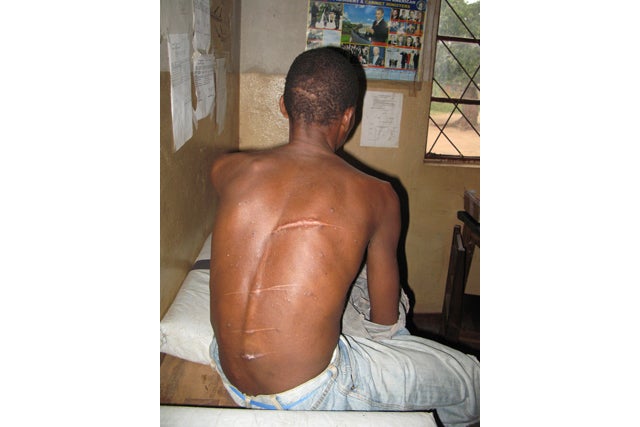
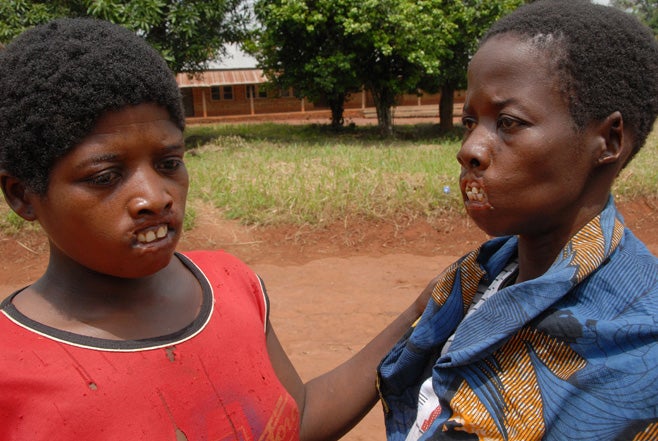
During the abduction campaign, the LRA has brutally killed adults and children who tried to escape, walked too slowly, or were unable to bear the heavy loads they were forced to carry, Human Rights Watch found in its investigations in the region. The LRA has killed at least 255 adults and children, often by crushing their skulls with clubs. In dozens of cases, the LRA forced captive children to kill other children and adults.
"The LRA continues its horrific campaign to replenish its ranks by brutally tearing children from their villages and forcing them to fight," said Anneke Van Woudenberg, senior Africa researcher at Human Rights Watch. "The evidence points to Joseph Kony, the LRA leader, as the author of this atrocious campaign."
Human Rights Watch called on the affected governments and their allies to strengthen their protection of civilians and to put greater emphasis on efforts to rescue the abducted children and others.
A month-long Human Rights Watch research mission to the Central African Republic (CAR) and the Bas Uele district of northern Congo from July 12 to August 11, 2010, in which over 520 civilians were interviewed, including 90 former abductees, in individual and focus group interviews, found that the LRA's abduction campaign was similar in both countries and is having a devastating impact on affected communities.
In southeastern CAR, the LRA began large-scale abductions on July 21, 2009, and to date has abducted 304 people, including many children. The LRA first attacked the villages surrounding Obo, before moving west toward Rafai, Guérékindo, Gouyanga, Kitessa and Mboki, along the Congolese border, and north toward Djema, Baroua, and Derbissaka. Most recently, on June 12 and 13, 2010, the LRA abducted 16 people in farms surrounding the town of Rafai, including a mother and her 2-year-old daughter, both of whom the rebels later killed.
A similar LRA abduction campaign is under way in the remote Bas Uele district of Congo. On March 15, 2009, the LRA attacked the town of Banda, abducting some 80 people. In the months that followed, the LRA progressed westward, conducting raids on the towns and villages of Dakwa, Bayule, Disolo, Esse, and further north in Digba, Sukadi, and Gwane, among others.
On May 27, 2010, the LRA attacked numerous villages near Ango, the territorial capital, abducting 23 people, including 16 children. Some abductees who later escaped told Human Rigths Watch that the LRA questioned them about the location of schools in Ango, indicating the rebels may have been seeking specifically to abduct children. The LRA advance was halted when they encountered Congolese soldiers less than 15 kilometers from Ango, forcing them to change direction.
During the LRA's campaign in Bas Uele between March 2009 and June 2010, the rebels abducted at least 375 people, at least 127 of them children, most ages 10 to 15. More recent information indicates that there have been more LRA attacks.
There has been very little reporting of the LRA's numerous abuses in the region because it is so remote and communications are so poor. Few humanitarian agencies are working there, and there is only a small United Nations presence.
Tens of thousands of people have fled the area. In southeastern CAR an estimated 15,000 to 20,000 people have sought refuge in the main towns, leaving entire villages abandoned. In the last few months, the government has deployed about 200 troops to the area to help protect civilians, too few to provide adequate protection. The Ugandan army has made some troops available to help protect civilians in the area.
Civilian protection concerns in Bas Uele district are even greater. An estimated 54,000 civilians have been displaced in the district or have sought refuge across the border in CAR. The Congolese army has deployed an army battalion to the area, but it is ill-equipped and has little or no transportation and communications equipment.
The UN peacekeeping mission in Congo, MONUSCO, with 19,000 peacekeepers across the country, has only 1,000 in the LRA-affected areas of northeastern Congo - far too few for the scale and geographical breadth of the problem. No peacekeepers are based in Bas Uele district. In the past two months, the MONUSCO base in Dingila, Bas Uele district, was closed and new MONUSCO bases expected to open in Dakwa and Digba have not yet been established.
"The protection of civilians under LRA attack across central Africa is woefully inadequate, with some communities receiving no protection or humanitarian aid at all," Van Woudenberg said. "National governments, the Ugandan army, and the UN need to take urgent steps to protect people from these LRA attacks."
A Vicious Abduction CampaignHuman Rights Watch's field investigations have found that LRA combatants often attack villages early in the morning or late in the day, when residents are likely to be home. The LRA fighters grab their victims and tie them to one another at the waist in long human chains. The abductions are usually followed by extensive looting of food, clothing, salt, and other items, which are loaded in heavy bundles onto the captives' heads, backs, and shoulders before they are marched off into the forest.
A 40-year-old woman from Guerekindo in southeastern CAR told Human Rights Watch how on March 29, 2010, she watched in horror as the LRA tied up her husband and five young children in a human chain, loaded them with the household's goods, and dragged them out of their home. She was left on her own with twin infants and has had no news of her missing family members.
According to former abductees, once away from a main road, the LRA force their captives to work for hours or days shelling peanuts, a staple crop in the area, or pounding rice or manioc to prepare for cooking. Those who work too slowly are beaten. The LRA rebels prohibit captives from speaking to one another and from eating, drinking water, or going to the toilet without permission.
Once the work is completed, some adults may be released, though they are usually viciously beaten or otherwise humiliated first. In Digba, Bas Uele, on September 27, 2009, the LRA whipped each of the 12 Congolese adult abductees with branches, then with a machete after they had worked all night shelling peanuts, before releasing them. A 41-year-old teacher in the group was punished more severely because he spoke English.
In another case, following large-scale abductions in Banda, the LRA forced their Congolese captives to dance for their freedom, releasing some adults only after they had danced for several hours. A woman who was released told Human Rights Watch: "I still remember the horrors of that night and being forced to look happy while I danced for my life. I am terrified that the LRA will come back."
Adults who are not released may be kept as porters, forced to march at a rapid pace to the LRA's next location, heavily loaded with pillaged goods. Those who cannot keep up are killed. On May 6, the LRA killed a 42-year-old Central African man named Bungu near Meskine, in CAR, who was loaded down with basins of peanuts and bags of rice. When he fell in a swamp area and was unable to get up, an LRA combatant beat him on the head with a heavy wooden club, crushing his skull.
Adults who make it to an LRA camp are often killed instead of released. One 12-year-old Congolese girl told Human Rights Watch that she was forced to participate in killing dozens of adults who had reached an LRA camp to prevent them from revealing its location to government soldiers or the Ugandan army.
"The LRA tied the hands of the victims behind their back, a cord around their legs, and placed the victims face down on the ground," she said. "Then the LRA would give us children a heavy wooden stick and force us to beat them on the head till they died."
Brutalization of Children
Human Rights Watch found that abducted children are usually separated from the adults and kept close to the LRA commanders. They are rarely released. They quickly learn to obey the LRA's rules and to speak Acholi, the commanders' language, and are exposed to immense brutality to integrate them into the group. The LRA forces many children, as part of their indoctrination, to kill other children who try to escape or fail to obey the rules.
Of the 45 children interviewed by Human Rights Watch, most of those who had been with the LRA a month or more had been forced to kill other children. Human Rights Watch received information of at least 42 children killed by other child abductees in 2009 and 2010, though the figure is probably much higher.
Military training begins within months of captivity. Many children as young as 10 or 11, abducted in Congo, CAR, and Southern Sudan in 2008 and 2009, are now armed with guns and participate in LRA attacks. LRA combatants use mind control methods to get children to forget their lives back home and to view other human beings as animals. Witnesses to LRA attacks and those who were abducted told Human Rights Watch that the young LRA combatants are usually the most vicious and are ordered to carry out the beatings and killings.
The LRA assigns abducted girls to commanders for sex or as servants. Refusing sexual relations often results in death. A 17-year old Congolese girl, Osanna, abducted in Banda in March 2009, protested when a commander tried to rape her. The LRA tied her up and forced other children abducted from Banda to kill her by taking turns hitting her on the head with a heavy wooden stick. Her 12-year-old sister was forced to participate.
Children who escape are deeply traumatized by what they have experienced. One 15-year-old boy who had spent eight months with the LRA before he escaped told Human Rights Watch: "I am no longer the same. I often think about how many people I killed and then I can't sleep. I will never forget what they made me do."
Ordered From LRA's Central Command
The available information strongly indicates that the LRA's central command has been ordering these abductions, which have been conducted in a manner consistent with the LRA's well-established practices. Abductees who spent months with the LRA before managing to escape said the abduction campaign was carried out on orders from Kony that LRA commanders should replenish their ranks.
At least four former abductees who spent months or years with the LRA and had learned to speak Acholi told Human Rights Watch that there was a clear order from Kony to his commanders to abduct children. Some indicated that the abduction campaign was to enable the LRA to return to Uganda. Human Rights Watch has also seen transcripts of two oral messages from Kony in May in CAR, indicating that he continues to communicate with a number of his commanders.
Human Rights Watch research found that the campaign in CAR is led by Gen. Okot Odhiambo, the LRA's second in command, and by LRA groups acting under the direct command of Kony. In Bas Uele, the campaign is led by Lt. Col. Kidega, a senior LRA commander who has a number of smaller LRA groups under his command. Human Rights Watch also received reports of abductions and killings by Gen. Caesar Acelam in the areas around Yalinga and Bria in the Haut-Kotto prefecture of CAR.
Three of the LRA's leaders, including Kony and Odhiambo, are sought by the International Criminal Court under arrest warrants issued in July 2005 for war crimes and crimes against humanity in northern Uganda. All three remain at large and continue to commit atrocities.
Long History of LRA AtrocitiesThe recent LRA abductions and killings are part of the rebel force's longstanding practice of atrocities and abuse. Pushed out of northern Uganda by the Ugandan military in 2005, the LRA now operates in the remote border area between southern Sudan, Congo, and CAR.
In December 2008, the governments of the region, led by the Ugandan armed forces and with intelligence and logistical support from the United States, opened a military campaign against the LRA in northeastern Congo, known as Operation Lightning Thunder. The military campaign failed to end the violence or to apprehend the LRA's leaders. Instead, the LRA spread out across the central African region and have continued their campaign against civilians.
Human Rights Watch has previously reported on widespread and horrific killings in the Haut Uele district in northern Congo, including two deadly LRA rampages: one over the 2008 Christmas period, when 865 were killed, and a massacre in the Makombo area in December 2009, which resulted in the deaths of at least 345 civilians.
Human Rights Watch has urged the US government to swiftly carry out the legislation signed by President Barack Obama on May 26 to develop a comprehensive strategy to protect civilians in central Africa from LRA attacks, bring LRA leaders implicated in atrocities to justice, and, together with regional governments, end violence by the rebel group.
During the abduction campaign, the LRA has brutally killed adults and children who tried to escape, walked too slowly, or were unable to bear the heavy loads they were forced to carry, Human Rights Watch found in its investigations in the region. The LRA has killed at least 255 adults and children, often by crushing their skulls with clubs. In dozens of cases, the LRA forced captive children to kill other children and adults.
"The LRA continues its horrific campaign to replenish its ranks by brutally tearing children from their villages and forcing them to fight," said Anneke Van Woudenberg, senior Africa researcher at Human Rights Watch. "The evidence points to Joseph Kony, the LRA leader, as the author of this atrocious campaign."
Human Rights Watch called on the affected governments and their allies to strengthen their protection of civilians and to put greater emphasis on efforts to rescue the abducted children and others.
A month-long Human Rights Watch research mission to the Central African Republic (CAR) and the Bas Uele district of northern Congo from July 12 to August 11, 2010, in which over 520 civilians were interviewed, including 90 former abductees, in individual and focus group interviews, found that the LRA's abduction campaign was similar in both countries and is having a devastating impact on affected communities.
In southeastern CAR, the LRA began large-scale abductions on July 21, 2009, and to date has abducted 304 people, including many children. The LRA first attacked the villages surrounding Obo, before moving west toward Rafai, Guérékindo, Gouyanga, Kitessa and Mboki, along the Congolese border, and north toward Djema, Baroua, and Derbissaka. Most recently, on June 12 and 13, 2010, the LRA abducted 16 people in farms surrounding the town of Rafai, including a mother and her 2-year-old daughter, both of whom the rebels later killed.
A similar LRA abduction campaign is under way in the remote Bas Uele district of Congo. On March 15, 2009, the LRA attacked the town of Banda, abducting some 80 people. In the months that followed, the LRA progressed westward, conducting raids on the towns and villages of Dakwa, Bayule, Disolo, Esse, and further north in Digba, Sukadi, and Gwane, among others.
On May 27, 2010, the LRA attacked numerous villages near Ango, the territorial capital, abducting 23 people, including 16 children. Some abductees who later escaped told Human Rigths Watch that the LRA questioned them about the location of schools in Ango, indicating the rebels may have been seeking specifically to abduct children. The LRA advance was halted when they encountered Congolese soldiers less than 15 kilometers from Ango, forcing them to change direction.
During the LRA's campaign in Bas Uele between March 2009 and June 2010, the rebels abducted at least 375 people, at least 127 of them children, most ages 10 to 15. More recent information indicates that there have been more LRA attacks.
There has been very little reporting of the LRA's numerous abuses in the region because it is so remote and communications are so poor. Few humanitarian agencies are working there, and there is only a small United Nations presence.
Tens of thousands of people have fled the area. In southeastern CAR an estimated 15,000 to 20,000 people have sought refuge in the main towns, leaving entire villages abandoned. In the last few months, the government has deployed about 200 troops to the area to help protect civilians, too few to provide adequate protection. The Ugandan army has made some troops available to help protect civilians in the area.
Civilian protection concerns in Bas Uele district are even greater. An estimated 54,000 civilians have been displaced in the district or have sought refuge across the border in CAR. The Congolese army has deployed an army battalion to the area, but it is ill-equipped and has little or no transportation and communications equipment.
The UN peacekeeping mission in Congo, MONUSCO, with 19,000 peacekeepers across the country, has only 1,000 in the LRA-affected areas of northeastern Congo - far too few for the scale and geographical breadth of the problem. No peacekeepers are based in Bas Uele district. In the past two months, the MONUSCO base in Dingila, Bas Uele district, was closed and new MONUSCO bases expected to open in Dakwa and Digba have not yet been established.
"The protection of civilians under LRA attack across central Africa is woefully inadequate, with some communities receiving no protection or humanitarian aid at all," Van Woudenberg said. "National governments, the Ugandan army, and the UN need to take urgent steps to protect people from these LRA attacks."
A Vicious Abduction CampaignHuman Rights Watch's field investigations have found that LRA combatants often attack villages early in the morning or late in the day, when residents are likely to be home. The LRA fighters grab their victims and tie them to one another at the waist in long human chains. The abductions are usually followed by extensive looting of food, clothing, salt, and other items, which are loaded in heavy bundles onto the captives' heads, backs, and shoulders before they are marched off into the forest.
A 40-year-old woman from Guerekindo in southeastern CAR told Human Rights Watch how on March 29, 2010, she watched in horror as the LRA tied up her husband and five young children in a human chain, loaded them with the household's goods, and dragged them out of their home. She was left on her own with twin infants and has had no news of her missing family members.
According to former abductees, once away from a main road, the LRA force their captives to work for hours or days shelling peanuts, a staple crop in the area, or pounding rice or manioc to prepare for cooking. Those who work too slowly are beaten. The LRA rebels prohibit captives from speaking to one another and from eating, drinking water, or going to the toilet without permission.
Once the work is completed, some adults may be released, though they are usually viciously beaten or otherwise humiliated first. In Digba, Bas Uele, on September 27, 2009, the LRA whipped each of the 12 Congolese adult abductees with branches, then with a machete after they had worked all night shelling peanuts, before releasing them. A 41-year-old teacher in the group was punished more severely because he spoke English.
In another case, following large-scale abductions in Banda, the LRA forced their Congolese captives to dance for their freedom, releasing some adults only after they had danced for several hours. A woman who was released told Human Rights Watch: "I still remember the horrors of that night and being forced to look happy while I danced for my life. I am terrified that the LRA will come back."
Adults who are not released may be kept as porters, forced to march at a rapid pace to the LRA's next location, heavily loaded with pillaged goods. Those who cannot keep up are killed. On May 6, the LRA killed a 42-year-old Central African man named Bungu near Meskine, in CAR, who was loaded down with basins of peanuts and bags of rice. When he fell in a swamp area and was unable to get up, an LRA combatant beat him on the head with a heavy wooden club, crushing his skull.
Adults who make it to an LRA camp are often killed instead of released. One 12-year-old Congolese girl told Human Rights Watch that she was forced to participate in killing dozens of adults who had reached an LRA camp to prevent them from revealing its location to government soldiers or the Ugandan army.
"The LRA tied the hands of the victims behind their back, a cord around their legs, and placed the victims face down on the ground," she said. "Then the LRA would give us children a heavy wooden stick and force us to beat them on the head till they died."
Brutalization of Children
Human Rights Watch found that abducted children are usually separated from the adults and kept close to the LRA commanders. They are rarely released. They quickly learn to obey the LRA's rules and to speak Acholi, the commanders' language, and are exposed to immense brutality to integrate them into the group. The LRA forces many children, as part of their indoctrination, to kill other children who try to escape or fail to obey the rules.
Of the 45 children interviewed by Human Rights Watch, most of those who had been with the LRA a month or more had been forced to kill other children. Human Rights Watch received information of at least 42 children killed by other child abductees in 2009 and 2010, though the figure is probably much higher.
Military training begins within months of captivity. Many children as young as 10 or 11, abducted in Congo, CAR, and Southern Sudan in 2008 and 2009, are now armed with guns and participate in LRA attacks. LRA combatants use mind control methods to get children to forget their lives back home and to view other human beings as animals. Witnesses to LRA attacks and those who were abducted told Human Rights Watch that the young LRA combatants are usually the most vicious and are ordered to carry out the beatings and killings.
The LRA assigns abducted girls to commanders for sex or as servants. Refusing sexual relations often results in death. A 17-year old Congolese girl, Osanna, abducted in Banda in March 2009, protested when a commander tried to rape her. The LRA tied her up and forced other children abducted from Banda to kill her by taking turns hitting her on the head with a heavy wooden stick. Her 12-year-old sister was forced to participate.
Children who escape are deeply traumatized by what they have experienced. One 15-year-old boy who had spent eight months with the LRA before he escaped told Human Rights Watch: "I am no longer the same. I often think about how many people I killed and then I can't sleep. I will never forget what they made me do."
Ordered From LRA's Central Command
The available information strongly indicates that the LRA's central command has been ordering these abductions, which have been conducted in a manner consistent with the LRA's well-established practices. Abductees who spent months with the LRA before managing to escape said the abduction campaign was carried out on orders from Kony that LRA commanders should replenish their ranks.
At least four former abductees who spent months or years with the LRA and had learned to speak Acholi told Human Rights Watch that there was a clear order from Kony to his commanders to abduct children. Some indicated that the abduction campaign was to enable the LRA to return to Uganda. Human Rights Watch has also seen transcripts of two oral messages from Kony in May in CAR, indicating that he continues to communicate with a number of his commanders.
Human Rights Watch research found that the campaign in CAR is led by Gen. Okot Odhiambo, the LRA's second in command, and by LRA groups acting under the direct command of Kony. In Bas Uele, the campaign is led by Lt. Col. Kidega, a senior LRA commander who has a number of smaller LRA groups under his command. Human Rights Watch also received reports of abductions and killings by Gen. Caesar Acelam in the areas around Yalinga and Bria in the Haut-Kotto prefecture of CAR.
Three of the LRA's leaders, including Kony and Odhiambo, are sought by the International Criminal Court under arrest warrants issued in July 2005 for war crimes and crimes against humanity in northern Uganda. All three remain at large and continue to commit atrocities.
Long History of LRA AtrocitiesThe recent LRA abductions and killings are part of the rebel force's longstanding practice of atrocities and abuse. Pushed out of northern Uganda by the Ugandan military in 2005, the LRA now operates in the remote border area between southern Sudan, Congo, and CAR.
In December 2008, the governments of the region, led by the Ugandan armed forces and with intelligence and logistical support from the United States, opened a military campaign against the LRA in northeastern Congo, known as Operation Lightning Thunder. The military campaign failed to end the violence or to apprehend the LRA's leaders. Instead, the LRA spread out across the central African region and have continued their campaign against civilians.
Human Rights Watch has previously reported on widespread and horrific killings in the Haut Uele district in northern Congo, including two deadly LRA rampages: one over the 2008 Christmas period, when 865 were killed, and a massacre in the Makombo area in December 2009, which resulted in the deaths of at least 345 civilians.
Human Rights Watch has urged the US government to swiftly carry out the legislation signed by President Barack Obama on May 26 to develop a comprehensive strategy to protect civilians in central Africa from LRA attacks, bring LRA leaders implicated in atrocities to justice, and, together with regional governments, end violence by the rebel group.