Translation

.يولد جميع الناس أحرارا متساوين في الكرامة والحقوق. وقد وهبوا عقلا وضميرا وعليهم أن يعامل بعضهم بعضا بروح الإخاء‎
FoxLingo German Spanish French Arabic Czech Greek Hungarian Italian Polish Portuguese Romanian Russian Serbian Slovenian Thai Turkish
Showing posts with label justice. Show all posts

Wednesday, October 6, 2010

Israeli Police Given Protection for Killing

By Mel Frykberg
SHUAFAT, Occupied East Jerusalem, Oct 6, 2010 (IPS) - A peaceful morning is interrupted by the sounds of an Israeli helicopter circling overhead -- often a sign of trouble on the ground. Later Sunday the news broke -- a Palestinian man was shot dead in the village of Issawiya by Israeli paramilitary border police as he tried to enter Israel in search of work.

Father of five, 38-year-old Ezzidine Al-Kawazba from Hebron became the latest Palestinian casualty to die at the hands of the Israeli security forces in disputed circumstances. The policeman who shot Al-Kawazba alleged that his weapon went off "accidentally" and that he "didn't mean to kill the labourer."

Ahmed Tibi, an Israeli-Arab Minister of the Israeli Knesset, condemned the shooting. "Once again Israel's police officers and border police shoot and kill an Arab in cold blood. This time it was a father to many children who was trying to enter Jerusalem to find work for his livelihood.

"Again the automatic false claim was made that a Palestinian tried to take a Border Policeman's weapon. Will the police force, once again, rally behind this murdering officer? Will he, too, gain the status of a hero that killed another Arab?"

Earlier, IPS attended the funeral of Sameh Sarhan from East Jerusalem after he was shot dead by an Israeli security guard, who claimed self-defence, outside the illegal Israeli settlement of King David in occupied East Jerusalem. Video evidence taken at the scene contradicted the security guard's version of events. Sarhan's killing sparked a week of riots.

The latest killing in Issawiya came as two Israeli soldiers were convicted by an Israeli military court of using Palestinians as human shields during Israel's Operation Cast Lead in Gaza December 2008-January 2009, which left more than 1,400 Palestinians dead, most of them civilian.

The soldiers were convicted of offences including inappropriate behaviour and overstepping authority for ordering an 11-year-old Palestinian boy to search bags suspected to have been booby-trapped.

The Israeli police have said they are investigating the two latest shootings. However, a lack of confidence in the integrity of police investigations when security force members are involved in the killing of unarmed Palestinians has been backed by several Israeli rights groups.

The Israel Democracy Institute is due to release a report accusing the Israeli police of "bias in analysing evidence" in relation to three Israeli-Arabs shot dead by police during the October 2000 riots (the beginning of the second Palestinian Intifadah, or uprising) in northern Israel. Thirteen Palestinians were shot dead and hundreds were injured.

The study investigates the circumstances which prompted then Israeli attorney general Menachem Mazuz to follow the state prosecutor's recommendation to close the inquiries into the deaths of three men on the basis of lack of evidence.

Prof. Mordechai Kremnitzer and former Haifa district attorney Lina Saba, who conducted the study, examined files containing dozens of pieces of accumulated evidence.

The Israeli daily Haaretz reported that according to the investigators, "the study shows that closing these three cases was unjustified and the Department for Investigating Policemen, and the prosecution, did not complete the investigation. The examination also showed the prosecution took a biased approach in analysing the evidence."

Several months ago Israeli policeman Shahar Mizrahi, who shot dead an unarmed Palestinian motorist who he claimed was a car thief, was sentenced to an original 15 months imprisonment. This was later doubled to 30 months on appeal when an Israeli court found the killing unnecessary as the officer's life was not in danger as he had claimed.

Yitzhak Aharonovitch, Israel's internal security minister, and Dudi Cohen, the police commissioner said they would immediately seek a presidential pardon for Mizrahi. "I won't merely support a pardon bid, I'll lead it," added Aharonovitch.

Israeli police gave Mizrahi more than 42,500 dollars for legal expenses in the initial criminal case, and a further 50,000 dollars for his appeal to the Supreme Court.

Israeli rights group Yesh Din reported earlier in the year that only "six percent of investigations yielded indictments against Israeli soldiers who harmed Palestinians."

Another Israeli human rights organisation B'tselem released a report last month 'Void of Responsibility: Israel Military Policy not to investigate Killings of Palestinians by Soldiers'.

In the report B'tselem stated that "at the beginning of the second Intifadah, the Judge Advocate General's Office announced that it was defining the situation in the Occupied Territories as an 'armed conflict', and that investigations would be opened only in exceptional cases, in which there was a suspicion that a criminal offence had been committed.

"This policy, which led to a significant drop in Military Police investigations of homicide cases, ignored the varying character of the army's actions in the Occupied Territories, and treated every act carried out by soldiers as a combat action, even in cases when these acts bear the clear hallmarks of a policing action." Meanwhile, another Palestinian mosque near Bethlehem was torched and vandalised on Sunday night by Israeli settlers. A number of copies of the Koran were reported destroyed. Clashes then broke out between Palestinians and the settlers. Israeli soldiers subsequently arrived and forced the settlers to retreat, but none were arrested.

Several West Bank mosques have been subjected to settler vandalism and arson attacks since last year. Others have had anti-Arab and anti-Muslim graffiti scrawled on their walls. The Israeli authorities have not charged anyone.

Sunday, June 20, 2010

Martyrs of the Green Movement

by MUHAMMAD SAHIMI in Los Angeles

19 Jun 2010 19:3517 Comments
Names of 110 killed in political violence over the past year.

The Iranian year of 1388 ended on March 20, 2010. It was one of the most turbulent years in the country's modern history. Its beginning and end were both marked by much promise, but for completely different reasons. The year had begun with the hope that the presidential election of June 12, 2009, would result in the election of a candidate with a vision for a better Iran -- a more open, more tolerant society, with less corruption, no political crimes, freedom of the press, and freedom of thought. This hope was dashed when the hardliners rigged the election and declared Mahmoud Ahmadinejad the "victor."

But precisely due to this antidemocratic fraud, the Green Movement that had arisen before the election gathered strength. It spread its wings and presented to the world a completely different image of Iran: a country with a young, educated, dynamic population that is willing to stand up to the forces of oppression and repression, express itself eloquently, and sacrifice for a better future. Thus, as Iran begins its new year, there is renewed hope.

Mousavi-supporter-Azadi-square-Tehran.jpgThe past year also recorded the largest number of Iranian people who lost their lives due to political violence since the bloody summer of 1988 (1367 in the Iranian calendar), when about 4,500 political prisoners were executed. The riots that erupted in mid-1992 and, particularly, the Eslamshahr riots of April 1995 did result in many deaths (though still not as many as in 2009), but they had mostly to do mostly with people's anger over rampant inflation and lack of basic services and were not fundamentally political.

How many people were murdered in 1388 due to political violence? No one really knows, and in a nation where there is virtually no independent press to serve as a watchdog, it is very difficult to get an accurate estimate of the total number of casualties. We can, however, distinguish between two groups among those confirmed as dead. In one group are those whose families have declared the martyrdom of their loved ones to the two committees that Mir Hossein Mousavi and Mehdi Karroubi have set up for compiling the list of the killed. In the second group are those whose families have been under tremendous pressure not to report the death of their loved ones to the two committees, and not to speak to the press.

The credible Iranian sources reporting on the number of people killed include Norooz News, the website of the Islamic Iran Participation Front, Iran's largest political party and leading reformist group; Kalame, Mousavi's official website; and Kalameh Sabz, Jonbeshe-Rah-e Sabz, and Aras News, three reformist news sites supportive of the Green Movement. In a few cases, news wires aligned with the hardliners, such as the Fars News Agency, which is controlled by the Islamic Revolutionary Guard Corps, have also confirmed the deaths of demonstrators or those who were arrested.

Several organizations have also published lists of people whose deaths have been confirmed by multiple credible sources. One is the League for the Defense of Human Rights in Iran. Its list of confirmed murders, containing more than 100 names, was first published in August 2009 and updated on March 10, 2010. A list of 72 names was published by Aseman Daily News in September 2009. Norooz News just published the precise addresses of the graves of 50 people in Tehran's Behesht-e Zahra cemetery.

What follows is the list of 107 confirmed dead collated from all of the credible sources. Their age, if known, is in parentheses. First, a few statistics: 13 of the killed (12 percent) were women; at least 23 of them were university students (22 percent); two were tortured to death; two were journalists. In several cases, there is no information about how the victims were killed -- all we know is the location of their graves.
1. Neda Agha Soltan (27), university student, murdered on June 20, 2009, in Tehran.
2. Kianoush Asa, university student, killed on June 15, 2009, in Tehran.
3. Behzad Aghazadeh Ghahramani, murdered on July 17, 2009, after the Friday prayers in Tehran led by former president Ali Akbar Hashemi Rafsanjani.
4. Morad Aghasi, murdered on July 17, 2009, in the Kahrizak detention center on the southern edge of Tehran.
5. Mina Ehterami, university student, killed on June 15, 2009, in the attack on the Tehran University dormitory.
6. Hossein Akhtar Zand (32), murdered on June 15, 2009, in Shiraz.
7. Arman Estakhripour (18), beaten to death on July 13, 2009, in Shiraz.
8. Neda Asadi; nothing is known about the circumstances of her death.
9. Amir Eslamian, university student, working for Mousavi's campaign; his body was discovered on November 27, 2009, in Boukan.
10. Saeed Esmaeili Khanbebin (23), hit in the head and killed.
11. Sohrab Erabi (19), pre-university student, murdered in Evin Prison on June 20, 2009.
12. Alireza Eftekhari (29), journalist, killed by hits to the head on June 15, 2009; his body was given to his family the following month.
13. Naser Amirnejad (26), university student in aerospace engineering, killed in Yasouj.
14. Mohsen Entezami, murdered in the Kahrizak detention center on July 14, 2009.
15. Vahed Akbari (34), killed on June 20, 2009, after his arrest in Tehran's Vanak Square.
16. Hossein Akbari, killed by hits to the head on July 26, 2009.
17. Mohsen Imani, university student, killed in the attack on the Tehran University dormitory on June 15, 2009.
18. Fatemeh Barati, university student, killed in the attack on the Tehran University dormitory on June 15, 2009.
19. Mohammad Hossein Barzegar (25), killed by a bullet to his head, after being arrested in Tehran's Haft-e Teer Square on June 17, 2009.
20. Yaghoub Boroayeh, university student, killed by a bullet on June 25, 2009.
21. Jafar Boroayeh, assistant professor at the University of Ahwaz, killed by a bullet to his head on June 28, 2009.
22. Sorour Borouman (58), killed on June 15, 2009, in Tehran.
23. Hamed Besharati (26), blogger and poet; nothing is known about the circumstances of his death.
24. Jahanbakhsh Pazouki (31), killed by a knife on December 28, 2009 (Day of Ashura).
25. Mohammad Javad Parandakh, university student; nothing is known about how he was killed.
26. Dr. Ramin Pourandarjani, physician on duty in the Kahrizak detention center, presumably poisoned on November 10, 2009.
27. Amir Arshaf Tajmir, killed on December 28, 2009 (Day of Ashura) in Tehran.
28. Farzad Jashni, killed on June 20, 2009.
29. Somayyeh Jafargholi, university student, killed by a bullet on September 27, 2009.
30. Bahman Jenabi; nothing is known about the circumstances of his death.
31. Amir Javadifar, university student, arrested on July 9, 2009; died in prison.
32. Moharram Chegini Gheshlaghi (35); nothing is known about how he was murdered.
33. Mohsen Haddadi (24), computer programmer, killed by a bullet to his forehead on June 23, 2009.
34. Ali Hassanpour, killed on June 15, 2009, in Tehran's Azadi Square; his body was given to his family 105 days later.
35. Amir Mehdi Hamzehlouei, killed in Gheyterieh Park in Tehran on October 2, 2009.
36. Hesam Hanifeh (19), killed by a bullet to his chin on June 16, 2009.
37. Mehrdad Heidari, journalist, killed on July 13, 2009, in Mashhad.
38. Masoud Khosravi, killed in Tehran's Azadi Square on June 15, 2009.
39. Sh. Khezri, university student, killed in Tehran's Baharestan Square on June 15, 2009.
40. Abbas Disnad (40), killed by hits to his head on June 20, 2009; his body was given to his family after $15,000 was paid.
41. Mohammad Raeis-Najafi, beaten to death near Tehran's Azadi Square on June 15, 2009.
42. Mohammad Ali Rasekhi-Nia (40), killed by a bullet on December 28, 2009 (Day of Ashura).
43. Fatemeh Rajabpour (38), killed with her mother, Ms. Borouman (number 22 above).
44. Shahrokh Rahmani (26), run over by a car on December 28, 2009 (Day of Ashura) in Tehran.
45. Dr. Rahimi; nothing is known about the circumstances of his death.
46. Hamid Rezaei, killed on January 1, 2010, in Homayounshahr.
47. Ramin Ramazani (22); nothing is known about how he was murdered.
48. Mohsen Ruhol-amini (25), university student, killed in the Kahrizak detention center.
49. Babak Sepehr (35); nothing is known about how he was killed.
50. Fahimeh Selahshour (25), killed by hits to her head in Tehran's Vali-Asr Square on June 14, 2009.
51. Fatemeh Semsarpour, killed by a bullet on June 20, 2009, near Tehran's Azadi Square.
52. Ashkan Sohrabi (18), high school student, killed by a bullet in Tehran on June 20, 2009.
53. Tina Soudi, university student, killed by a bullet on June 20, 2009, in Tehran's Enghelab Square.
54. Hassan Shapouri, killed on July 14, 2009.
55. Ali Shahnazar (41), killed on September 29, 2009.
56. Ali Shahedi (24), killed on June 21, 2009, while detained by police.
57. Kasra Sharafi, university student, killed in the attack on the Tehran University dormitory on June 15, 2009.
58. Kambiz Shoaei, university student, killed in the attack on the Tehran University dormitory on June 15, 2009.
59. Shafi' Nejad, killed on June 15, 2009.
60. Zahed Shekarabi (20), tortured to death in Esfahan on July 21, 2009.
61. Yousef Saleh; nothing is known about how he was murdered.
62. Davoud Sadri (27), killed by a bullet on June 15, 2009, in Tehran; his body was given to his family after $6,000 was paid, plus a $350 charge for the bullet.
63. Seyyed Reza Tabatabaei (30), killed by a bullet to his head on June 20, 2009, in Tehran.
64. Vahid Reza Tabatabaei (29), killed by a bullet to his head on June 26, 2009, in Tehran.
65. Hossein Toufanpour, killed by a bullet to his head on June 20, 2009, in Tehran.
66. Hossein Tahmasebi (25), killed when his head was repeatedly hit by an object on June 15, 2009, in Kermanshah.
67. Salar Tahmasebi (27), university student, killed by a bullet to his head on June 20, 2009, in Tehran.
68. Maysam Ebadi, killed by a bullet to his abdomen on June 13, 2009, in Tehran's Sadeghieh Square.
69. Saeed Abbasi (28), killed on June 20, 2009; his body was given to his family after $8,000 was paid.
70. Abolfazl Abdollahi (21), killed by a bullet to his head on June 20, 2009, in Tehran.
71. Hamid Araghi, killed by a bullet on June 27, 2009; his family, initially told to pay $12,000 for his body, eventually paid $5,000.
72. Kaveh Alipour (19), killed on June 20, 2009; his family paid $3,000 to get his body.
73. Mostafa Ghanyan, university student, killed in the attack on the Tehran University dormitory on June 15, 2009.
74. Reza Fattahi, university student, killed in the Kahrizak detention center on July 14, 2009.
75. Ali Fathalian, killed in Tehran; nothing else is known.
76. Shahram Faraji (30), killed on December 28, 2009 (Day of Ashura) in Tehran.
77. Mehdi Farhadirad (34), killed by a bullet to his face on December 28, 2009 (Day of Ashura) in Tehran.
78. Mohammad Hossein Fayzi (28); nothing is known about how he was killed.
79. Sajjad Ghaed Rahmati; nothing is known about how he was murdered.
80. Salar Ghorbani Param (22); nothing is known about how he was murdered.
81. Rahim Mahmoudpour, killed by a bullet on August 3, 2009, in Tehran.
82. Hamid Maddah Shourcheh, university student, killed after his head was repeatedly hit by an object.
83. Moazzez (27), killed by a bullet to his eye on June 20, 2009, near Tehran's Azadi Square.
84. Pouya Azadbeigi, arrested on June 20, 2009, and died soon after his release.
85. Dr. Moghsoudlou; nothing is known about the circumstances of his murder.
86. Behzad Mohajer (47), killed by a bullet to his heart on June 15, 2009.
87. Maryam Mehraaein (24); nothing is known about how she was murdered.
88. Taraneh Mousavi, murdered on June 28, 2009.
89. Seyyed Ali Mousavi Habibi (42), nephew of Mir Hossein Mousavi, assassinated on December 28, 2009 (Day of Ashura) in Tehran.
90. Mostafa Mirebrahimi (22), killed under torture in August 2009.
91. Mohammad Naderipour, university student and Mousavi campaign worker.
92. Nader Naseri, killed on June 20, 2009, in Tehran.
93. Ahmad Nejati, killed by hits to his head.
94. Ahmad Naeimabadi, killed by a bullet in Tehran's Azadi Square.
95. Iman Namazi, university student, killed in the attack on the Tehran University dormitory on June 15, 2009.
96. Mohammad Ali Nikzadi (22), architect, killed by a bullet to his abdomen on June 16, 2009, in Tehran.
97. Masoud Hashemzadeh, killed by a bullet on June 20, 2009, in Tehran.
98. Iman Hashemi (27), killed by a bullet to his eye on June 20, 2009, in Azadi Street in Tehran.
99. Mostafa Kashani Rasa, Mousavi campaign worker, killed by a bullet at the campaign headquarters in Gheytarieh, Tehran, on June 14, 2009.
100. Mohammad Kamrani (18), died in Tehran's Mehr Hospital.
101. Mehdi Karami (25), killed by a bullet to his neck on June 15, 2009, in Tehran.
102. Mostafa Karim Beigi (27), murdered by a bullet to his head on October 27, 2009.
103. Parisa Kolli (25), university graduate, killed by a bullet to her neck on June 21, 2009, in Tehran.
104. Majid Kamali (23), killed on August 25, 2009.
105. Amir Kaviri; nothing is known about how he was murdered.
106. Mostafa Kiarostami (22), killed by hits to his head on July 17, 2009.
107. Milad Yazdanpanah (30), killed by a bullet in Azadi Street in Tehran.
Three other people lost their lives for the Green Movement. One is Mohammad Asghari, who was a computer expert and worked for the office of computer security at the Ministry of Interior. He leaked a considerable amount of information about the actual vote count after the rigged June 2009 election and mysteriously lost his life in a car accident soon thereafter. It is widely believed that he was murdered.

The other two are Mohammad Reza Ali Zamani (37) and Arash Rahmanipour (19). They had been arrested before the election, but were hanged in early January 2010 in what is widely believed to be a message to the supporters of the Green Movement that they too could be hanged. Neither one had committed any serious offense.
In addition, Dr. Masoud Ali-Mohammadi, professor of physics at the University of Tehran, was assassinated. There is considerable evidence that he was murdered by the hardliners, although this is not a certainty.

These are freedom fighters who lost their precious lives for their ideals. Their place in history is assured. The Iranian people will never forget them.

Mir Hossein Mousavi has declared 1389 the year of patience, resistance against the hardliners, and efforts to achieve citizens' legal rights. Certainly, those who have lost loved ones need a lot of patience. Let us hope that by the end of the year Iran will be well on its way to a democratic society, so that those who lost their loved ones can see the fruits of their sacrifice.

Muhammad Sahimi is a columnist for Tehran Bureau.

Copyright © 2010 Tehran Bureau

Saturday, March 27, 2010

DR Congo: Lord’s Resistance Army Rampage Kills 321

Regional Strategy Needed to End Rebel Group’s Atrocities and Apprehend Leaders
2010_DRC_LRA1.jpg

The Makombo massacre is one of the worst ever committed by the LRA in its bloody 23-year history, yet it has gone unreported for months. The four-day rampage demonstrates that the LRA remains a serious threat to civilians and is not a spent force, as the Ugandan and Congolese governments claim.
Anneke Van Woudenberg, senior Africa researcher
(Kampala) - The rebel Lord's Resistance Army (LRA) killed at least 321 civilians and abducted 250 others, including at least 80 children, during a previously unreported four-day rampage in the Makombo area of northeastern Democratic Republic of Congo in December, 2009, Human Rights Watch said in a report released today.

"The Makombo massacre is one of the worst ever committed by the LRA in its bloody 23-year history, yet it has gone unreported for months," said Anneke Van Woudenberg, senior Africa researcher at Human Rights Watch. "The four-day rampage demonstrates that the LRA remains a serious threat to civilians and is not a spent force, as the Ugandan and Congolese governments claim."

The 67-page report, "Trail of Death: LRA Atrocities in Northeastern Congo," is the first detailed documentation of the Makombo massacre and other atrocities by the LRA in Congo in 2009 and early 2010. The report, based on a Human Rights Watch fact-finding mission to the massacre area in February, documents the brutal killings during the well-planned LRA attack from December 14 to 17 in the remote Makombo area of Haute Uele district.

LRA forces attacked at least 10 villages, capturing, killing, and abducting hundreds of civilians, including women and children. The vast majority of those killed were adult men, whom LRA combatants first tied up and then hacked to death with machetes or crushed their skulls with axes and heavy wooden sticks. The dead include at least 13 women and 23 children, the youngest a 3-year-old girl who was burned to death. LRA combatants tied some of the victims to trees before crushing their skulls with axes.

The LRA also killed those they abducted who walked too slowly or tried to escape. Family members and local authorities later found bodies all along the LRA's 105-kilometer journey through the Makombo area and the small town of Tapili. Witnesses interviewed by Human Rights Watch said that for days and weeks after the attack, this vast area was filled with the "stench of death."

Children and adults who managed to escape provided similar accounts of the group's extreme brutality. Many of the children captured by the LRA were forced to kill other children who had disobeyed the LRA's rules. In numerous cases documented by Human Rights Watch, children were ordered to surround the victim in a circle and take turns beating the child on the head with a large wooden stick until the child died.

The United Nations Peacekeeping Mission in Congo (MONUC) has some 1,000 peacekeeping troops in the LRA-affected areas of northeastern Congo - far too few to protect the population adequately, given the area's size.  Yet instead of sending more troops, the peacekeeping force, under pressure from the Congolese government to withdraw from the country by July 2011, is considering removing some troops from the northeast by June in the first phase of its drawdown.

"The people of northeastern Congo are in desperate need of more protection, not less," said Van Woudenberg. "The UN Security Council should stop any drawdown of MONUC peacekeeping troops from areas where the LRA threatens to kill and abduct civilians."

In mid-April, the Security Council is due to visit Congo to discuss the peacekeeping force's   plans for withdrawal and the protection of civilians.
The Makombo massacre is part of a longstanding history of atrocities and abuse by the LRA in Uganda, southern Sudan, the Central African Republic (CAR), and Congo. Pushed out of northern Uganda in 2005, the LRA now operates in the remote border area between southern Sudan, Congo, and CAR. In July 2005, the International Criminal Court issued arrest warrants for the senior leaders of the LRA for crimes they committed in northern Uganda, but those indicted remain at large.

The Human Rights Watch research indicated that the Makombo massacre was perpetrated by two LRA commanders - Lt. Col. Binansio Okumu (also known as Binany) and a commander known as Obol. They report to Gen. Dominic Ongwen, a senior LRA leader who is believed to command the LRA's forces in Congo and who is among those sought by the International Criminal Court. Human Rights Watch urged investigations of these commanders' alleged participation in war crimes and crimes against humanity.

In December 2008, the governments of the region, led by the Ugandan armed forces, with intelligence and logistical support from the United States, began a military campaign known as Operation Lightning Thunder against the LRA in northeastern Congo. A surprise aerial strike on the main LRA camp failed to neutralize the LRA leadership, which escaped. In retaliation, the LRA attacked villages and towns in northern Congo and southern Sudan, killing more than 865 civilians during the Christmas 2008 holiday season and in the weeks thereafter.

On March 15, 2009, Operation Lightning Thunder officially ended, following pressure from the Congolese government, which found it politically difficult to support a continued Ugandan army presence on Congolese territory. But a covert joint military campaign continued, with the quiet approval of the Congolese president, Joseph Kabila. Both governments publicly maintain that the LRA is no longer a serious threat in Congo and that the bulk of the rebel group has either moved to Central African Republic or has been killed or dispersed.

These public declarations might have contributed to burying information about ongoing LRA attacks, leaving many victims feeling abandoned. An 80-year-old traditional chief, whose son was killed during the Makombo massacre, told Human Rights Watch: "We have been forgotten. It's as if we don't exist. The government says the LRA are no longer a problem, but I know that's not true. I beg of you, please talk to others about what has happened to us."

While the Makombo massacre is the most deadly documented attack by the LRA since the Christmas massacres of 2008, dozens of attacks against civilians have also been carried out in other areas in recent months - near the towns of Bangadi and Ngilima in Haut Uele district, in Ango territory in Bas Uele district, as well as in the Central African Republic.

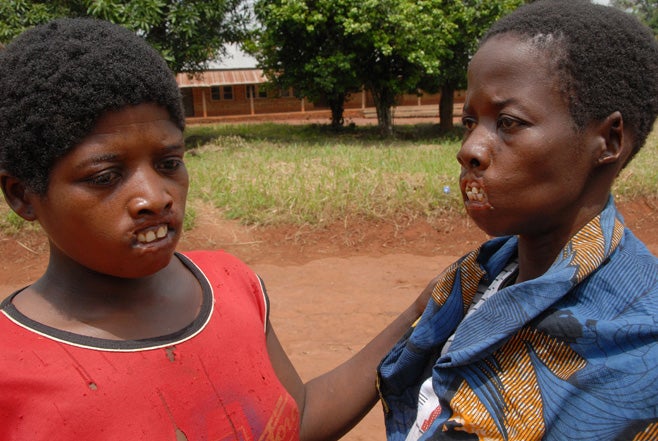
In the December 2009 attacks near Bangadi and Ngilima, LRA combatants horribly mutilated six civilians, cutting off each victim's lips and an ear with a razor. The LRA sent the victims back to their villages with a chilling warning to others that anyone who heard or spoke about the LRA would be similarly punished.

On March 11, 2010, the US Senate unanimously passed the Lord's Resistance Army Disarmament and Northern Uganda Recovery Act. If it becomes law, it will require President Barack Obama's administration to develop a regional strategy to protect civilians in central Africa from attacks by the LRA, to work to apprehend the LRA's leadership, and to support economic recovery for northern Uganda. The bill is currently before the House Committee on Foreign Affairs.

"The people of northeastern Congo and other LRA-affected areas have suffered for far too long," said Van Woudenberg. "The US and other concerned governments should work with the UN and regional parties to develop and carry out a comprehensive strategy to protect civilians and apprehend abusive LRA leaders."

Friday, March 26, 2010

Vatican Declined to Defrock U.S. Priest Who Abused Boys

The New York TimesBy LAURIE GOODSTEIN


Top Vatican officials — including the future Pope Benedict XVI — did not defrock a priest who molested as many as 200 deaf boys, even though several American bishops repeatedly warned them that failure to act on the matter could embarrass the church, according to church files newly unearthed as part of a lawsuit.

The internal correspondence from bishops in Wisconsin directly to Cardinal Joseph Ratzinger, the future pope, shows that while church officials tussled over whether the priest should be dismissed, their highest priority was protecting the church from scandal.

The documents emerge as Pope Benedict is facing other accusations that he and direct subordinates often did not alert civilian authorities or discipline priests involved in sexual abuse when he served as an archbishop in Germany and as the Vatican’s chief doctrinal enforcer.

The Wisconsin case involved an American priest, the Rev. Lawrence C. Murphy, who worked at a renowned school for deaf children from 1950 to 1974. But it is only one of thousands of cases forwarded over decades by bishops to the Vatican office called the Congregation for the Doctrine of the Faith, led from 1981 to 2005 by Cardinal Ratzinger. It is still the office that decides whether accused priests should be given full canonical trials and defrocked.

In 1996, Cardinal Ratzinger failed to respond to two letters about the case from Rembert G. Weakland, Milwaukee’s archbishop at the time. After eight months, the second in command at the doctrinal office, Cardinal Tarcisio Bertone, now the Vatican’s secretary of state, instructed the Wisconsin bishops to begin a secret canonical trial that could lead to Father Murphy’s dismissal.

But Cardinal Bertone halted the process after Father Murphy personally wrote to Cardinal Ratzinger protesting that he should not be put on trial because he had already repented and was in poor health and that the case was beyond the church’s own statute of limitations.

“I simply want to live out the time that I have left in the dignity of my priesthood,” Father Murphy wrote near the end of his life to Cardinal Ratzinger. “I ask your kind assistance in this matter.” The files contain no response from Cardinal Ratzinger.

The New York Times obtained the documents, which the church fought to keep secret, from Jeff Anderson and Mike Finnegan, the lawyers for five men who have brought four lawsuits against the Archdiocese of Milwaukee. The documents include letters between bishops and the Vatican, victims’ affidavits, the handwritten notes of an expert on sexual disorders who interviewed Father Murphy and minutes of a final meeting on the case at the Vatican.

Father Murphy not only was never tried or disciplined by the church’s own justice system, but also got a pass from the police and prosecutors who ignored reports from his victims, according to the documents and interviews with victims. Three successive archbishops in Wisconsin were told that Father Murphy was sexually abusing children, the documents show, but never reported it to criminal or civil authorities.

Instead of being disciplined, Father Murphy was quietly moved by Archbishop William E. Cousins of Milwaukee to the Diocese of Superior in northern Wisconsin in 1974, where he spent his last 24 years working freely with children in parishes, schools and, as one lawsuit charges, a juvenile detention center. He died in 1998, still a priest.

Even as the pope himself in a recent letter to Irish Catholics has emphasized the need to cooperate with civil justice in abuse cases, the correspondence seems to indicate that the Vatican’s insistence on secrecy has often impeded such cooperation. At the same time, the officials’ reluctance to defrock a sex abuser shows that on a doctrinal level, the Vatican has tended to view the matter in terms of sin and repentance more than crime and punishment.

The Vatican spokesman, the Rev. Federico Lombardi, was shown the documents and was asked to respond to questions about the case. He provided a statement saying that Father Murphy had certainly violated “particularly vulnerable” children and the law, and that it was a “tragic case.” But he pointed out that the Vatican was not forwarded the case until 1996, years after civil authorities had investigated the case and dropped it.

Father Lombardi emphasized that neither the Code of Canon Law nor the Vatican norms issued in 1962, which instruct bishops to conduct canonical investigations and trials in secret, prohibited church officials from reporting child abuse to civil authorities. He did not address why that had never happened in this case.

As to why Father Murphy was never defrocked, he said that “the Code of Canon Law does not envision automatic penalties.” He said that Father Murphy’s poor health and the lack of more recent accusations against him were factors in the decision.

The Vatican’s inaction is not unusual. Only 20 percent of the 3,000 accused priests whose cases went to the church’s doctrinal office between 2001 and 2010 were given full church trials, and only some of those were defrocked, according to a recent interview in an Italian newspaper with Msgr. Charles J. Scicluna, the chief internal prosecutor at that office. An additional 10 percent were defrocked immediately. Ten percent left voluntarily. But a majority — 60 percent — faced other “administrative and disciplinary provisions,” Monsignor Scicluna said, like being prohibited from celebrating Mass.

To many, Father Murphy appeared to be a saint: a hearing man gifted at communicating in American Sign Language and an effective fund-raiser for deaf causes. A priest of the Milwaukee Archdiocese, he started as a teacher at St. John’s School for the Deaf, in St. Francis, in 1950. He was promoted to run the school in 1963 even though students had disclosed to church officials in the 1950s that he was a predator.

Victims give similar accounts of Father Murphy’s pulling down their pants and touching them in his office, his car, his mother’s country house, on class excursions and fund-raising trips and in their dormitory beds at night. Arthur Budzinski said he was first molested when he went to Father Murphy for confession when he was about 12, in 1960.

“If he was a real mean guy, I would have stayed away,” said Mr. Budzinski, now 61, who worked for years as a journeyman printer. “But he was so friendly, and so nice and understanding. I knew he was wrong, but I couldn’t really believe it.”

Mr. Budzinski and a group of other deaf former students spent more than 30 years trying to raise the alarm, including passing out leaflets outside the Milwaukee cathedral. Mr. Budzinski’s friend Gary Smith said in an interview that Father Murphy molested him 50 or 60 times, starting at age 12. By the time he graduated from high school at St. John’s, Mr. Smith said, “I was a very, very angry man.”

In 1993, with complaints about Father Murphy landing on his desk, Archbishop Weakland hired a social worker specializing in treating sexual offenders to evaluate him. After four days of interviews, the social worker said that Father Murphy had admitted his acts, had probably molested about 200 boys and felt no remorse.

However, it was not until 1996 that Archbishop Weakland tried to have Father Murphy defrocked. The reason, he wrote to Cardinal Ratzinger, was to defuse the anger among the deaf and restore their trust in the church. He wrote that since he had become aware that “solicitation in the confessional might be part of the situation,” the case belonged at the doctrinal office.

With no response from Cardinal Ratzinger, Archbishop Weakland wrote a different Vatican office in March 1997 saying the matter was urgent because a lawyer was preparing to sue, the case could become public and “true scandal in the future seems very possible.”

Recently some bishops have argued that the 1962 norms dictating secret disciplinary procedures have long fallen out of use. But it is clear from these documents that in 1997, they were still in force.

But the effort to dismiss Father Murphy came to a sudden halt after the priest appealed to Cardinal Ratzinger for leniency.

In an interview, Archbishop Weakland said that he recalled a final meeting at the Vatican in May 1998 in which he failed to persuade Cardinal Bertone and other doctrinal officials to grant a canonical trial to defrock Father Murphy. (In 2002, Archbishop Weakland resigned after it became public that he had an affair with a man and used church money to pay him a settlement.)

Archbishop Weakland said this week in an interview, “The evidence was so complete, and so extensive that I thought he should be reduced to the lay state, and also that that would bring a certain amount of peace in the deaf community.”

Father Murphy died four months later at age 72 and was buried in his priestly vestments. Archbishop Weakland wrote a last letter to Cardinal Bertone explaining his regret that Father Murphy’s family had disobeyed the archbishop’s instructions that the funeral be small and private, and the coffin kept closed.

“In spite of these difficulties,” Archbishop Weakland wrote, “we are still hoping we can avoid undue publicity that would be negative toward the church.”


Rachel Donadio contributed reporting from Rome.

Document Trail: The Predator Priest Who Got Away

Monday, March 15, 2010

How paedophile priest was allowed to evade justice


Watch Olenka Frenkiel's investigation in full
Former priest Bill Carney was named as one of the worst cases in Dublin's Catholic diocese in the Murphy report into clerical abuse there. However, for the last 10 years he has been free to live quietly in Britain.
Newsnight's Olenka Frenkiel has investigated his case and tracked him down in the Canary Islands.

Bill Carney
Carney used to invite children to his house in Ayrfield to watch videos
All the children in Ayrfield, Dublin, knew fun-loving Father Bill Carney - not just the altar boys and those who met him through school, but members of the Scout troop he ran and the groups of local children he took swimming.
His door was always open, there was a ready supply of Coke in the fridge and in the 1980s he had the very latest thing to lure youngsters in - a video player.
Adults disapproved of his swearing and crazy driving, but the Catholic Church was still so trusted, no-one suspected the truth about him.
Bridie Dwyer still lives in Ayrfield. Above the fireplace, with other family photographs is a picture of her youngest child, Paul, on his first Communion day.
At the age of 13 Paul went with other boys to watch videos at Father Carney's house and to have a sleepover, Mrs Dwyer told me. But at 2am Paul unexpectedly returned home.
"Thought you were going for a sleepover?" she recalled asking him as he pushed past her. "Didn't want to stay," he replied and shut his door.
Paul Dwyer
Carney is accused of raping Paul Dwyer when Paul was 13
"That's when he'd been raped," Mrs Dwyer told me, "but I didn't know".
What no-one, except Carney's bishop and the local police, knew was that the priest was a paedophile.
The Murphy report into the cover up by the Catholic Church and Irish state of clerical sex abuse was published in November 2009.
It described Carney as "a serial sexual abuser of children, male and female", saying that there had been complaints and suspicions "in respect of 32 named individuals" about him, adding that "there is evidence he abused many more children".
'Child in his bed'
Michael Wheeler, who as a boy was one of Carney's altar servers, said that following the report a strange but vivid memory from when he was young suddenly made sense.
He told me that when he was nine years old Carney was late for Mass one day, so, fearful that he might not turn up, he ran into the priest's house and called his name.
Bridie Dwyer
He wanted Carney in court so he could ask him why, why had Carney raped him? That never happened and the way things are going, the way the police and the clergy are handling it now I can't see it ever happening
Bridie Dwyer, mother of Paul
"I heard a groan," he said, "and I saw in the bedroom, a boy, a little older than me, naked between the sheets.
"This boy sat up, stared groggily at me, and fell back into the bed. I was terrified and ran out. As a child I couldn't understand why he was there. Now I know."
We now know that complaints about Carney were diverted away from the Irish criminal justice system to Bishop James Kavanagh, a man described by the Murphy Report as someone with "a soft spot for Carney".
Kavanagh did what he could to protect Carney from the law to avoid scandal for the Church.
One conscientious policeman, praised in the Murphy Report, did investigate complaints and they came to court. But the press were kept away as Carney pleaded guilty to two counts of indecent assault and got probation.
Six families were paid compensation and Carney was soon back working, with access to children.
Paid to leave parish
Carney on wedding day
Carney got married in Scotland in 2004
In its 40 pages on Carney, the Murphy report said that his was one of the worst cases the commission investigated and that the Church's handling of his case was "nothing short of catastrophic".
"It was inept, self-serving and for the best part of 10 years displayed no obvious concern for the welfare of children," the report said.
In 1992, the Church convicted Carney internally, under Canon law, of child sexual abuse.
But this compulsive paedophile refused to leave the parish house. So the Church paid him £30,000 to go away.
He moved to Cheltenham and then to Scotland, where he has lived for the last 10 years running a family-friendly guest house in St Andrews.
Back in Dublin, it took Bridie's son Paul Dwyer 21 years to come forward, but in 2004 he told the police about his rape.
The police said they had received two other complaints like his and sent the file to the Irish director of public prosecutions (DPP), but the DPP said there was not enough evidence to prosecute.
"So the case stopped," his mother told me, "and, a couple of weeks later Paul committed suicide. He couldn't handle it any more.
"He wanted Carney in court so he could ask him why, why had Carney raped him? That never happened and the way things are going, the way the police and the clergy are handling it now I can't see it ever happening," she added.
No warnings given
That same year, in Scotland, Carney got married.
Newsnight has established that the Irish authorities knew his address but no-one, either from the Church or the Irish state, thought to warn his new wife about his past, or protect any children who might be at risk.
His refusal to acknowledge his paedophilia means the prognosis for a cure is bleak
Psychiatric assessment of Carney in Murphy report
Nothing was done to prevent him leaving, as usual, for his winter holiday in the Canary Islands, a popular destination for families with children, and no-one warned the local police.
The Murphy report quotes a psychiatric assessment which says he suffers from a "psychopathic personality disorder".
"His refusal to acknowledge his paedophilia," it said, "means the prognosis for a cure is bleak".
Confronted over abuse
I tracked Carney down in the Canary Islands, first at a restaurant on the sea front and then to the flat where he was staying, to ask about the abuse.
He refused to comment on the Murphy report, saying he had not read it.
He claimed that when he pleaded guilty to child sex abuse in 1983 it was not because he was guilty, but because: "I was told if I plead guilty the press would be kept away."
When I asked "Why did you rape Paul Dwyer?" his response was: "Rape. I'd like to explain that. Put it into context."
Bishop James Kavanagh
Bishop James Kavanagh protected Carney from the law
What kind of context, I asked, could excuse the rape of a child? But he did not answer.
And when I asked "Are you still abusing children?" his answer begged more questions.
"I haven't done that in 26 years and I have had no inclination," he said. But he refused to be drawn on whether that was admission that he had abused before.
Assistant Garda Commissioner John O'Mahoney has been assigned the task of investigating whether anyone should be prosecuted as a result of the revelations in the Murphy report.
These investigations, his office has said, are ongoing.
In Britain, the Home Office said that because Carney's two convictions for indecent assault pre-date the 2003 Sex Offender's Act and took place in Ireland he would not be on the Sex Offenders Register and would pass unseen through the new stricter vetting procedures for child protection.
Carney meanwhile remains free to disappear beneath the radar.

Friday, February 26, 2010

Sex-chantaje: 15 años de prisión para los adolescentes

Anthony ŠTANCL en el juicio

Un tribunal de EE.UU. ha condenado a 19 años a 15 años en la cárcel porque tiene un perfil de Facebook falsa, de 31 de sus compañeros de clase fotos de desnudos o videos a escondidas - y chantajeados por sus víctimas de servicios sexuales.

Anthony ŠTANCL de New Berlin (Wisconsin) se había creado un perfil en Facebook, en la que se describió como una mujer joven ( "Kayla"). Con esta identidad, le preguntó a sus compañeros de clase en la escuela secundaria para la desnudez erótica.
Al menos 31 de ellos entre la primavera de 2007 y diciembre de 2008 con la petición. Después de ŠTANCL se dio a conocer y pidió a los estudiantes una elección: o bien la práctica de varios actos sexuales con él o él está dispuesto a publicar las fotos y videos en Internet. Un total de siete alumnos se han embarcado en el acuerdo. Las relaciones sexuales se ha ŠTANCL filmado con su cámara de teléfono celular.

La policía buscaba pistas, por último, el equipo de los 19 años de edad y se encontró cerca de 300 imágenes sexuales de sus compañeros de clase de la edad de 15 años. El miércoles después de que un tribunal condenó al acusado a una pena de prisión de 15 años, incluido el abuso infantil. El fiscal había solicitado antes de 30 años en prisión. Durante la sentencia ŠTANCL pidió disculpas a sus víctimas. Ahora entiende lo que les hizo a ellos, dijo el ex alumno.

Tras su liberación ŠTANCL será de 34 años de edad. Después de que él será capaz de disfrutar de otros 13 años en libertad condicional, la única libertad.

La red social Facebook ya ha empleado en el pasado los tribunales.
Sol era un hombre de negocios de Londres en 2008 por daños y perjuicios en la cantidad de 28.000 euros, porque estaba en el perfil equivocado significa, entre otras cosas, como homosexuales.

Tuesday, June 30, 2009

The Widening Divide

6a00d83451c45669e20115703a8e68970c 500wi The Widening Divide

The rift in the clerical establishment

By MUHAMMAD SAHIMI in Los Angeles | 30 June 2009

[TEHRAN BUREAU] As the Iranian government crisis enters its 19th day, fissures among the clerics are gradually becoming deeper and more visible. These differences between hard-liners and leftists go back to 1988, but what has been surprising is the reaction of moderate clerics and the silence of clerical hard-liners.

The importance of the emerging fissures in the ranks of the clerics is not that the leftist clerics are supporting Mir Hossein Mousavi in his confrontation with the hard-liners, but that the fissures are developing even among the ranks of the conservative ayatollahs and influential clerics who were usually supportive of Ayatollah Khamenei — or at least silent in order to present a seemingly united front against the leftist faction, as well as the reformist and democratic groups.

The clerics in Qom and Mashhad recognize that there is much more at stake than a disputed election. They see an existential threat to the entire Islamic Republic as they mull their decision whether to support the official result, protest it or continue to remain silent.

The clerics who support the unification of church and state — those who support the concept of Velaayat-e Faghih [the governance of the Islamic jurist, the Supreme Leader or the Faghih], the backbone of Iran’s power structure — see that by coming down most definitively on Mahmoud Ahmadinejad’s side, Ayatollah Khamenei may no longer be considered to be above the fray, or even feign impartiality. He has now become just another politician subject to criticism. This is damaging, not only to the concept of Velaayat-e Faghih, but also to the whole concept of Mahdi, the hidden 12th Imam, who is supposed to come back some day to save the world from injustice, corruption and chaos. How can the “deputy” of the hidden Imam be as fallible as the next politician?

In the view of many in the clerical class, Ayatollah Khamenei’s actions have been problematic, especially his response to the huge demonstrations that took place to protest the rigged election:

1) He did not wait for the Guardian Council to officially certify the election results; he very quickly declared them valid.

2) He said the 85% turnout indicated how politically mature the population was and showed how satisfied they were with the political system. (He failed to note that the same politically mature and “satisfied” population staged huge demonstrations protesting the votes and the government that he supports). This hard-line position of his effectively quashed the most famous quote by Ayatollah Khomeini, Mizaan ra’ye mardom ast [the true measure of (acceptance) is people’s vote].

3) He emphasized the rule of law, while neglecting all the violations of the same law by Ahmadinejad’s government and supporters. (All of these have been eloquently described and enumerated by Mousavi in his statements.)

4) He “recommended” that Mousavi pursue his complaints through the Guardian Council [the Constitutional body that vets the candidates and certifies the validity of the elections], while declaring at the same time that the election was valid, hence leaving little room for the Council to change the election results, even if it wanted to by finding enough evidence of fraud to declare the election invalid.

5) He threatened that if people were to demonstrate, any bloodshed and violence would be their own fault — the fault of unarmed demonstrators pitted against heavily armed security forces — and their leaders, Mousavi and Karroubi.

Since the incompetence of the Ahmadinejad administration, at least when it comes to managing the economy and certain aspects of foreign policy, is beyond dispute, by supporting the current president, Ayatollah Khamenei essentially declared his belief in Ahmadinejad-ism. Indeed, in his sermon on July 19, he declared that Ahmadinejad’s views are closer to his own than those of others, and that certain people [meaning Ahmadinejad], in his opinion, are more suited to serve the country.

And, of course, those clerics who are opposed to the concept of Valaayat-e Faghih and believe that the ayatollahs must not intervene in politics (other than being spiritual guides), such as Grand Ayatollah Ali Sistani in Iraq and his large following in Iran, or those who believe that the Supreme Leader has been granted too much power and must be brought under control, such as Grand Ayatollah Hossein Ali Montazeri, have found Ayatollah Khamenei’s actions to be solid reasons for the validity of their arguments.

Clerical reformers against Ayatollah Khamenei:

Tehran Bureau has already reported on the protests of several senior ayatollahs against the rigged election and its aftermath (read: “Grand Ayatollah Declares Three Days of National Mourning”). Grand Ayatollah Hossein Ali Montazeri, one of two most important marja’ taghlids [source of emulation] in Shiite Islam, strongly attacked the government, rejected the results of the rigged election, and called on people to continue their protests peacefully. This was not the first time Montazeri has criticized Iran’s government.

In 1997, shortly after President Khatami’s landslide victory, Montazeri made a famous speech on Velaayat-e Faghih, in which he courageously criticized Ayatollah Khamenei by saying that the Supreme Leader should not intervene in the affairs of the state and leave them to the president. Likening many of the Friday prayer imams in the Islamic Republic to Aakhoond Darbaari [a pre-Revolution phrase referring to clerics on the Shah’s payroll], he warned people not to confuse them with genuine religious leaders. [Watch the speech on YouTube.]

Ayatollah Sayyed Jalaloddin Taheri, an important reformist cleric who had been appointed the leader of the Friday prayers in the city of Isfahan by Ayatollah Khomeini right after the 1979 Revolution, has declared the election fraudulent, and the next Ahmadinejad term as illegitimate and tantamount to thievery. Taheri resigned as the leader of Friday prayers in Isfahan in 2002, protesting, in a highly publicized letter, what he called the terrible state of the nation. His letter provoked a direct rebuttal from Ayatollah Khamenei himself. Ayatollah Taheri strongly supported Mousavi in the presidential election.

In his statement, Taheri said he was witnessing “how the old enemies of Imam [Ayatollah Khomeini] who opposed the establishment of the Islamic Republic are now presenting themselves as the ideologues of the Revolution.”

“Did Imam believe that those who must be neutral in the election publicly support a particular candidate [Ahmadinejad]?” Taheri asked. “Did Imam allow the use of public resources for a particular candidate? Has religion given [the hard-liners] the permission [to do what they have done]? Why is it that the law is only supportive of you [referring to Ayatollah Khamenei's contention that the law must be implemented, and that the public protests are illegal]?”

Grand Ayatollah Asadollah Bayat Zanjani, a senior member of the Association of Militant Clerics (AMC), has urged Mousavi to resist the official election result, so “insulting people and disrespecting the laws would not become the norm in the country.”

The AMC backed Mousavi in the recent election. Ayatollah Zanjani warned the Judiciary that if it cannot address the rightful complaints of the people, they will seek out alternative ways to recover their rights.“God forbid, the final destination of which will be chaos, insecurity and insulting religion,” he said. He went on to declare that, “peaceful gathering and demonstrations are people’s rights, which have been recognized by [article 27 of] the Constitution.” He also accused the government of deviating from Ayatollah Khomeini’s “path and thoughts.”

Ayatollah Sayyed Hossein Mousavi Tabrizi, who was Chief Prosecutor under Ayatollah Khomeini, strongly attacked the government for its mishandling of the election. In an interview with a pro-Ahmadinejad Web site, he declared that the Guardian Council was biased and that people have a right to demonstrate.

“Ask me about the law,” Tabrizi said when he was reminded that Ayatollah Khamenei had forbidden further demonstrations. “I have nothing to do with them [the Supreme Leader and his supporters]. The Leader has expressed his own opinion, but I am talking about the law.

“The [1979] Revolution also occurred due to such talks [by the government]. The Shah also called the [demonstrating] people rioters. It was due to such reasons that the Shah’s regime was illegitimate. If it had not talked that way [calling people rioters] and had given the people their rights, it would not have become illegitimate. It does not make any difference who denies the people their rights. Whoever does that is illegitimate.”

He then mocked the fact that the number of votes cast in Ray (a town in the southern part of Tehran) was twice the number of eligible voters there.

Grand Ayatollah Abdolkarim Mousavi Ardabili, another close and senior aid to Ayatollah Khomeini, declared, “force should not be used to quell people’s protests. You [the government] must listen to people and their protests against the election. Let the people express their opinions. The response to [the protests by] the people must be convincing to them.”

Grand Ayatollah Yousef Saanei, a progressive cleric and a confidante of Ayatollah Khomeini, declared that Ahmadinejad was not the legitimate president and cooperation with him, as well as working for him, were haraam (against Islam and a great sin). He also declared that any changes in the votes by unlawful means were also haraam.

Hadi Ghaffari, a mid-rank cleric, strongly criticized Ayatollah Khamenei in a recent speech. His father was also an ayatollah killed by the Shah’s government, and he himself was jailed for many years before the 1979 Revolution. In the early years of the Revolution he was a hard-liner, but gradually changed his position; he has been strongly supportive of the reformists for many years. He was incredibly brazen in his criticisms of Ayatollah Khamenei. An audiotape of his speech was leaked and posted on YouTube, but has apparently been removed.

Grand Ayatollah Lotfollah Safi Golpayegani, who was the first Secretary-General of the Guardian Council after the Revolution, met with some members of the Council and expressed regrets for what had happened.

“I have some important things to say, but cannot for now,” he told the Council’s members. Part of the meeting was in secret, but he said in the public part of the meeting that, “We should have acted in a way that these issues would not have come up. We should have moderated our positions and opinions.”

Ayatollah Safi Golpayegani also held a secret meeting with Grand Ayatollah Mousa Shobeiri Zanjani, and reviewed the latest developments; little about their meeting has been publicized.

Clerical supporters of Ayatollah Khamenei:

To be sure, Ayatollah Khamenei still has many supporters among the conservative clergy. When he was appointed the Supreme Leader in June 1989, Ayatollah Khamenei was neither an ayatollah nor a marja’ taghlid [source of emulation]; under the Constitution, the Supreme Leader had to be both. So, not only was the Constitution revised in order to allow Ayatollah Khamenei to become the Supreme Leader, but he also needed the support of the senior clerics to be elevated to those ranks.

Those who supported Ayatollah Khamenei were mostly the conservative and ultra-conservative clerics. Their support of him was instrumental in his transformation from a progressive with an appreciation for the arts and literature, and even playing the taar — a fretted lute with six strings — into the conservative cleric he has become.

The senior clerics who support Ayatollah Khamenei today are those who have held, or currently hold, key positions in the government. They include Ahmad Jannati, Secretary-General of the Guardian Council; Mohammad Yazdi, former Judiciary chief; Khazali, former member of the Guardian Council; Mohammad Mohammadi Gilani, head of the Supreme Court, who ordered the execution of two of his own children in 1981; Mahmoud Hashemi Shahroudi, the Judiciary chief; Mohammad Mohammadi Rayshahri, former Minister of Intelligence whose real last name is Mohammadi-Nik; Mohammad Reza Mahdavi Kani, head of the ACC and former Prime Minister; Ebrahimi Amini, leader of Friday prayers of Qom; Mohammad Emami Kashani, Tehran’s temporary leader of Friday prayers; Hossein Nouri Hamadani, a hard-line instructor in Qom’s seminary; and Masih Mohajeri, editor-in-chief of the Islamic Republic, a daily that was founded by Ayatollah Khamenei himself. These are mostly senior figures among the clerics, many of them over 60 years old, with Jannati and Mahdavi Kani being the most influential among them.

There are also mid-rank, middle age clerics, such as Ghorbanali Dorri Najafabadi, the Attorney General and former Intelligence Minister; Mostafa Pourmohammadi, former Interior and Intelligence Minister, who has been implicated in the execution of thousands of political prisoners in the summer of 1988; Gholamhossein Mohseni Ejehei, Intelligence Minister; Ali Akbar Nategh Nouri, former Speaker of the Majles and head of the Supreme Leader’s Office of Inspection; Ahmad Khatami, a member of the Assembly of Experts (no relation to former president Mohammad Khatami); Ali Razini, senior figure in the Judiciary, also implicated in the executions of the summer of 1988; Ebrahim Raeisi, implicated in the summer 1988 executions, and chief deputy to Ayatollah Hashemi Shahroudi, the Judiciary chief; Ruhollah Hosseinian, a Majles deputy and head of Center for Islamic Revolution Documents; Ali Fallahian, a Majles deputy and former Intelligence Minister; and others.

Grand Ayatollah Naser Makaaren Shirazi, who has often supported the conservatives in the past, emphasized that the difficulties should be overcome wisely, rationally, and with attention to the future of the political system.

“The action to be taken must not leave any fire under the surface ash, and must transform pessimism to optimism and competition to friendship and cooperation between all the [political] groups,” Shirazi said.

It is interesting to note that Ayatollah Makaarem Shirazi was one of the earliest opponents of the Velaayat-e Faghih concept. He changed his mind, however, after reportedly being offered significant aid for his seminary. But, given the events in the country and Ahmadinejad’s track record, he has also felt the danger and has been increasingly speaking of the “independence of Qom’s theological schools” from the government.

“The basis for everything is the law,” declared Grand Ayatollah Abdollah Javadi Amoli — uncle of Ali Larijani, the Majles Speaker — in a speech during the Friday prayers in Qom on June 26. “But, the person who is supposed to execute the law declares that, ‘what I do is exactly according to the law,’ and it is him who decides what is lawful. This is problematic,” he said, hence seemingly referring to Ayatollah Khamenei and/or Ahmadinejad. He continued his thinly disguised criticism of the hard-liners by saying, “We must preserve religion, the howzah [the seminaries], and the maja’eeyat [the concept of emulation]. If any difference arises, these must be protected,” he said, warning that the hard-liners risk destroying the entire basis of Iran’s government by cracking down on protesters.

Even Ayatollah Mohyyodin Haeri-Shirazi, an ultra-conservative who is a member of the Assembly of Experts, wrote a highly cryptic and complex letter to Ayatollah Khamenei, as if he was trying to tell him something with coded words.

Perhaps the most important clerical supporters of Ayatollah Khamenei are Ayatollah Mohammad Taghi Mesbah Yazdi, Ayatollah Khoshvaght, and Ayatollah Khamenei’s own son, Mojtaba, a mid-ranking cleric.

The mysterious figure not known to most Iranians is Ayatollah Khoshvaght. Ayatollah Khamenei’s third son, Mostafa, is married to his daughter. He is a member of the Assembly of Experts, and in July 2007 ran for its presidency, which he lost to Rafsanjani. He is the prayer leader of a large mosque in northern Tehran, and is a radical hard-liner. It is believed, but never proven, that Saeed Emami, the notorious figure who was responsible for the infamous Chain Murders in 1998-1999, which resulted in the murder of six Iranian dissidents (and most likely many more murders from 1988-1998), was a follower of Ayatollah Khoshvaght. He is also said to be close to Ansaar-e Hezbollah, a radical group often unleashed to quell demonstrations.

Ayatollah Mesbah Yazdi, the spiritual leader of Ahmadinejad, is an ultra-conservative cleric who runs the Haghani Seminary and Imam Khomeini Educational Institute in Qom, which received $7 million in aid from the government in 2008. Ayatollah Khamenei has referred to Yazdi as “our era’s Motahhari” — a reference to Ayatollah Sayyed Morteza Motahhari, a disciple of Ayatollah Khomeini and a distinguished Islamic scholar who was assassinated a few months after the February 1979 Revolution — a great compliment, even though Motahhari’s and Yazdi’s thinking are the opposite of each other! Ahmadinejad’s first Vice President (Iran has eight vice presidents), Parviz Davoodi, is a disciple of Ayatollah Mesbah Yazdi, as are the Intelligence Minister, Mohseni Ejehei, and the Cabinet’s “morality teacher,” Agha-Tehrani.

However, even these conservative ayatollahs who are closest to the government have been suspiciously silent since the election. Almost none of them have congratulated Ahmadinejad. Even Ayatollah Mesbah Yazdi has been unusually silent. (Read more on Ayatollah Mesbah Yazdi in “Leaders of Iran’s election coup” and “Assembly of Experts”).

Meanwhile the nation waited to see what Hashemi Rafsanjani, the former president and powerful politician, would do as many believe that the current crisis is partly a manifestation of the long-time rivalry between him and the Supreme Leader. He appeared to be defending the political establishment and performing a perfunctory bow to the Supreme Leader on June 28, the 28th anniversary of the bombing of the headquarters of the Islamic Republican Party that killed many leaders and important figures of the Revolution; but he also criticized those who supervised the election. But, it is widely known that he has visited Qom to warn the clerics that the crisis is much deeper than the disputed election. So, it is perhaps more accurate to say that he is sitting on the fence to see what happens next. (Read more on Rafsanjani: “Rafsanjani’s Next Move” and “Who Will Lead?”)

Given all the developments listed above, one thing is for sure: Iranian politics will never be the same. Since the run up to the election, many lines have been crossed, many taboos broken, and the position of the Supreme Leader has fallen to earth. It is no longer a Godly position, as the hard-liners have always claimed. That, in the long run, can only be a positive development for Iran. Most importantly, the inherent contradiction between the concept of Velaayat-e Faghih and republicanism in Iran’s Constitution (electing the president, the parliament, and the city councils), which has always existed, has finally come to the fore.